

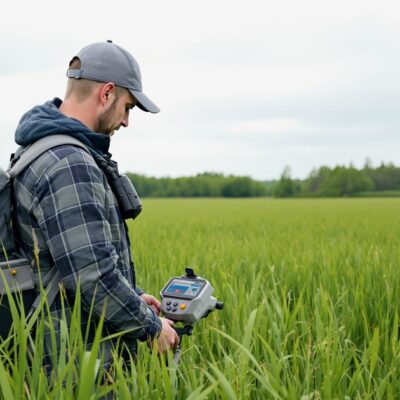



Kalle Lappinen never expected the dirt beneath his feet to change history. He was walking through a familiar field in his hometown of Sysmä, southern Finland, doing what he had done a hundred times before. The grass was tall. The afternoon was quiet. His metal detector swung back and forth with the easy rhythm of a hobbyist who had learned not to hope too hard.
Then the machine screamed.
What happened next would make headlines across Scandinavia, rewrite the record books for Finnish archaeology, and remind the world that extraordinary stories still hide in ordinary places. All it takes is one person willing to walk slowly and listen.
The Sound No Detectorist Forgets
Lappinen had been metal detecting for years. Like most people who take up the hobby, he had found his share of bottle caps, rusty nails, and coins from the 1970s. The thrill of the hunt kept him coming back, but so did the quiet. There is something meditative about sweeping a field, listening for the faint beep that might mean nothing or everything. You learn to live with disappointment. You learn to enjoy the search more than the find.
That afternoon in Sysmä, the beep came loud and sudden. It was not the soft chirp of aluminum foil or the steady hum of an iron pipe. It was aggressive, insistent, almost angry. He dug a few inches into the soil, and the detector did not fade. If anything, it grew louder. It roared.
“With the fury of a monkey, I dug through the soil, bottom moraine and cobblestones,” he later told the New York Times. Adrenaline surged through him. His hands moved on instinct, scraping away dirt and rock until his fingers hit something hard. Eighteen inches down, he pulled out a pile of compacted coins, fused together by centuries of pressure and dirt into a solid, dirty cake of silver.
He stood up, breathless, and looked at the field around him. It looked exactly the same. The same grass. The same sky. The same lazy clouds drifting overhead. But everything had changed. Somewhere beneath his boots, someone had buried a fortune a thousand years ago. And Kalle Lappinen had just found it.
Then It Happened Again
Lappinen did what responsible detectorists do. He stopped digging. He reported the find to local authorities. Archaeologists were contacted. The coins were preliminarily identified as silver, dating back to the 11th century, the twilight of the Viking Age. The excitement was already building when Lappinen’s detector began to yap again.
Just a stone’s throw from the first trove, the machine found something else. This second hoard was different. Mixed among thousands of additional coins was a silver bead, a bracelet, a charm, and a piece of chopped-up silver. These were not just currency. They were personal possessions, fragments of a life once lived, carried across seas and buried in haste.
Together, the two hoards weighed roughly ten pounds. Ten pounds of Viking silver. Buried in a Finnish field for nearly a thousand years, waiting for a man with a hobby and a free afternoon to spare.
For Lappinen, the second find was almost harder to process than the first. Lightning is not supposed to strike twice. But here he was, standing in the same field, holding another piece of the past that no one had touched since the age of longships.
Why the Vikings Buried Their Wealth
The 11th century was a turbulent time in Northern Europe. The Normans had conquered England. Christianity was spreading through Scandinavia, erasing old beliefs and reshaping political alliances. Trade routes stretched from the Baltic to Byzantium, and the seafaring Scandinavians we call Vikings moved through them all — as traders, settlers, and raiders.
Finland is not usually the first country people associate with Vikings, but the connection was deep and enduring. Swedish Vikings were active in the region for centuries, both as settlers and warriors. The silver in Sysmä likely arrived through these networks, carried across the Baltic Sea, traded for furs and amber, earned through violence or commerce, or collected as tribute.
Archaeologists who examined the hoards believe they were buried for safekeeping. No human remains were found nearby, which rules out a burial site. Someone — maybe a merchant, maybe a local chieftain, maybe a family fleeing conflict — dug a hole in that field, dropped their entire fortune inside, and planned to return when the danger passed.
They never did. And for a thousand years, the earth kept their secret.
A Record-Breaking Year for Treasure
The Sysmä discovery is not an isolated miracle. It is part of a stunning pattern that has made 2026 a historic year for Scandinavian metal detecting. In May, detectorists in Norway uncovered the largest trove of Viking Age silver ever found in that country. Just last month, a man in Denmark preparing his backyard for a new terrace stumbled upon the largest silver hoard in Danish history.
Now Finland joins the list. The Sysmä hoards are the largest of their kind ever discovered in the country, a find so significant that it has already drawn international attention. Eljas Oksanen, an archaeologist at the University of Helsinki, praised the discovery as “a case of responsible and responsive detecting, which has produced a promising archaeological discovery.”
Oksanen also noted something that should matter to anyone who dreams of finding lost history. Professional archaeologists do not search every field. They cannot. They have budgets, schedules, and limited manpower. Detectorists like Lappinen search where professionals do not go. Without hobbyists willing to spend their weekends walking through empty fields, these stories stay buried forever.
The Field Looks the Same
The coins and jewelry from Sysmä are now in the hands of experts. They will be cleaned, catalogued, studied, and eventually displayed in museums where thousands of visitors will gaze at them through glass. Each piece carries a story — of trade routes and sea voyages, of burying wealth in uncertain times, of a person who once stood in that same spot and made a choice that would echo for a millennium.
Lappinen has returned to his normal life, though nothing about that field will ever feel ordinary again. The grass still grows. The sky still stretches wide and gray over southern Finland. The birds still sing. But somewhere beneath the surface, history waits. And somewhere out there, right now, another detector is swinging, another hobbyist is walking, another machine is about to roar.