

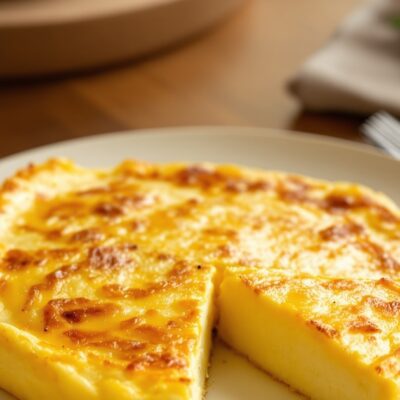



The dinner hiding in a short shopping list
There is a particular kind of kitchen disappointment: you have eggs, a few potatoes, and an onion, but somehow none of it looks like dinner. You could scramble the eggs or boil the potatoes, yet the ingredients still seem like separate things waiting for a better plan.
Spanish tortilla offers another possibility. Not the flatbread that shares its name, but a thick potato omelette that can become a meal in wedges or something to pass around in smaller pieces.
Its appeal is easy to understand before you ever cook it. The shopping list is manageable, the equipment is familiar, and you do not have to arrange six different dishes to make the table feel welcoming.
Then you read the method and reach the part that gives many new cooks pause. The omelette needs turning, and suddenly this simple dinner seems to require a confidence you were not sure you had.
But the flip is not where the most useful lesson begins. Long before you pick up a plate, the potatoes ask you to do something that can feel surprisingly difficult on a hungry evening: stop trying to hurry them.
Why this is not a quick scramble
In Delia Smith’s Spanish omelette recipe for BBC Food, the potatoes and onions cook gently before they meet the eggs. The aim is tenderness rather than the crisp, deeply browned edges you might want from fried breakfast potatoes.
That changes the entire task. You are not trying to produce a crunchy filling and wrap it in egg; you are building a soft, substantial middle that will hold together when sliced.
Smith describes tortilla as a main course, picnic food, or tapas cut into small cubes. One preparation can therefore fit different kinds of company without needing a completely different recipe.
Miriam Nice’s Spanish tortilla for Good Food Middle East takes a somewhat different route, adding butter and garlic and suggesting tomato-topped bread alongside. Her version also relies on slowly softened onion and potatoes rather than a rush over fierce heat.
These are two published recipes, not evidence that every Spanish household cooks tortilla identically. They offer something more useful to a beginner than a claim of one perfect formula: a shared principle, with room for choices.
The version below follows Smith’s smaller, straightforward ingredient proportions and gentle cooking approach. It is a sourced home-cooking adaptation, not a claim that this kitchen has tested every variation.
What to gather before you light the stove
For approximately three servings, gather the following. A salad alongside will turn the wedges into a fuller meal, but the tortilla itself does not need an elaborate supporting cast.
- 275g potatoes, peeled and thinly sliced
- 1 onion, approximately 110g, thinly sliced
- 5 large eggs
- 3 tablespoons olive oil, divided
- Salt and freshly ground black pepper, to taste
Use a nonstick frying pan with a base around 20cm across, a fitting lid, a large mixing bowl, and a flat plate large enough to cover the pan. Choose a pan you can handle securely rather than the heaviest one in the cupboard.
The size matters because a wider pan spreads the mixture more thinly, changing its depth and cooking time. A manageable pan also makes the turning step less awkward.
First, soften the filling. Pat the potato slices dry with a clean towel, then warm two tablespoons of the oil in the pan. Add the potatoes and onion, coat them in the oil, season lightly, and turn the heat down low.
Cover and cook gently for about 20 minutes, turning the mixture partway through. Check the potatoes with a fork: they should be tender, and if they are still firm, give them more time rather than relying only on the clock.
Next, bring the eggs in. Lightly beat the eggs in the bowl with a little seasoning, without trying to whip them into a foam. Add the softened potatoes and onions and mix gently so the filling is distributed.
Keep children away from the hot pan and save any helping hands for beating eggs or setting the table. A shared dinner should not depend on someone reaching across hot oil.
The moment that looks harder than it is
Now cook the tortilla slowly. Return the pan to the heat, add the remaining tablespoon of oil, and pour in the egg mixture. Reduce the heat to low and cook uncovered for roughly 20 to 25 minutes, watching its progress rather than treating the timing as a guarantee.
Use a suitable spatula to ease the edges inward occasionally. The base should set without burning while the top gradually loses its liquid appearance.
This is the point when impatience can seem like problem-solving. Turning the burner up may make the bottom cook faster, but it cannot guarantee that the middle catches up before the outside becomes too dark.
Turn only when the tortilla is holding together and virtually no liquid egg remains on top. Take the pan off the heat, check that the omelette releases around the edges, and place the plate securely over it.
Protect your hands from the hot pan and keep a firm grip on both pieces as you invert them together. Return the pan to the stove, then slide the tortilla back in with its uncooked side facing down.
Cook for about two more minutes, checking that the centre is set, then switch off the heat and let it settle for about five minutes. If it needs longer to cook through, allow that extra time; a loose centre is not a required badge of authenticity.
If turning a hot pan is unsafe for your grip or mobility, do not force the manoeuvre. Another suitable recipe or help from a confident cook is a better choice than proving a point over the stove.
What a slightly imperfect wedge can still do
The finished tortilla should be cooked through but still moist, with tender potatoes held together by egg. Slide it onto a clean plate and cut it into wedges for a meal, or smaller pieces for sharing.
A broken edge does not cancel the work that went into it. If your first attempt comes out uneven, you can still serve a properly cooked, good-tasting dinner without apologizing for every corner.
Both cited recipes allow serving the tortilla warm or cold. That flexibility does not mean leaving eggs unrefrigerated indefinitely: refrigerate leftovers promptly, within two hours, and follow appropriate food-safety guidance when packing a picnic.
There is no need to turn this ordinary cooking method into a promise that dinner will repair a difficult week. Sometimes a meal is simply a meal, and the effort it takes is already enough.
Still, this dish offers a practical kind of encouragement. A small collection of familiar ingredients can become something worth putting in the middle of the table, without a long shopping trip or a performance of perfection.
What is the modest dish you would make for someone you wanted to feel welcome? The answer might tell you more about hospitality than the most impressive recipe saved on your phone.
Image: AI-generated food illustration, not a photograph of a tested recipe.