




A familiar river, an unfamiliar question
How well can you know a place if you have only ever experienced it as yourself? Along the River Tone in Somerset, eighteen volunteers were asked to approach their surroundings with a question most riverside walks never raise: what would this place demand of an animal trying to survive here?
They were not simply sent out to spot wildlife. They were given information about different animals’ bodies and senses, then invited to explore as if their own needs no longer set the rules.
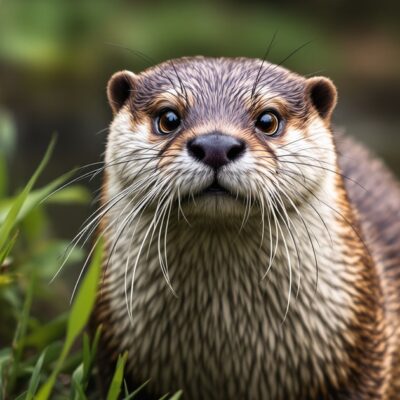
The project, Risks Beyond Human Eyes, brought together UWE Bristol and the Accelerator for Systemic Risk Assessment. Participants took on the perspectives of red deer, otters, earthworms, kestrels and salmon, returning with accounts of threats they believed those animals would encounter.
There is something disarming about that starting point. A river can look like an escape to a person standing beside it, while presenting obstacles to an animal that cannot choose another home.
For the volunteers, the exercise made familiar surroundings harder to take for granted. But the most interesting part of this story is not that people imagined being animals; it is what they did with the discomfort afterward.
The rules of the landscape changed
According to UWE Bristol’s account of the research, participants received detailed briefings about their selected species, particularly the ways those animals sense their surroundings. They undertook the exercises for a few hours at a time during the six-month project, rather than literally living as animals throughout it.
That distinction matters. This was an attempt to widen human attention, not a claim that a person could acquire an otter’s senses or know exactly what a salmon feels.
The volunteers reported perceived risks involving food, shelter and safety. These included roads that otters would need to cross, noise from trains, dogs entering the river after flea treatment, and a shortage of long grassland where kestrels could hunt.
Ordinary features of a human landscape began to invite different questions. Where is the safe route, if you cannot read the traffic? Where is dinner, if the habitat that supports your prey is missing?
Project lead Miguel Prado Casanova, a senior lecturer in philosophy, acknowledged the difficulty of the exercise in the university’s report. Humans cannot truly reproduce how another species smells or sees, even when they try seriously to understand it.
That limitation does not make the questions pointless. It means the useful response is curiosity with restraint: notice what might have been overlooked, then investigate it rather than treating imagination as proof.
The details that stopped being background
In Positive News’s October report, the accounts become strikingly specific. A participant exploring a deer’s perspective described how an earthwork behind a fence changed the smells she was using to orient herself.
Another participant, a soil ecologist considering life as an earthworm, described being overwhelmed by vibrations from a farm generator. These were human accounts of an exercise, not recordings of animals’ inner experiences, but they reveal the kinds of disturbance the project was trying to bring into view.
Jake Lawy explored the river from the perspective of an Atlantic salmon. His response included practical possibilities such as switching off street lighting close to the water and removing old weirs.
Those suggestions should not be confused with completed improvements. They were ideas emerging from a changed way of looking at the river, and any intervention would still need appropriate assessment and permission.
The emotional reactions were also real parts of the participants’ reports. UWE Bristol described some volunteers becoming very emotional when recounting their experiences, including a participant who had taken the salmon’s perspective.
It is easy to read that and jump straight to a comforting lesson about empathy. But the harder question comes next: what happens when care is no longer just a feeling you have while looking at something beautiful?
A person can leave the riverbank and return to a quieter room. The animal whose circumstances they have been considering does not necessarily have that option, and that difference gives the exercise its uncomfortable weight.
They brought the experience back as a map
The volunteers did not leave their accounts as private reflections. UWE Bristol says the perceived risks were plotted on a digital visualisation of the river catchment, connecting what participants noticed to particular places.
This is the turn that makes the project more than an unusual afternoon outdoors. A concern attached to a location can become a question for a land manager, a topic for ecological investigation, or a point around which neighbours organise.
Positive News reported that the study also helped inspire a thirty-year community campaign for the Tone. Phil Tovey, drawing on his experience as a Royal Marines Commando, helped adapt an open-source Ministry of Defence planning document for the work of river restoration.
The report describes a strategy informed by peaceful campaigning, with increasingly assertive but nonviolent approaches if earlier ones fail. Its finer details were not public, so there is no basis for pretending we know exactly what the next three decades will deliver.
Nor is there evidence here that the exercise has already restored the river or increased wildlife populations. UWE’s July account said findings would be submitted to an academic journal later in the year; that announcement is not itself proof of peer-reviewed publication.
What is documented is smaller, and still worth attention: people learned, reported, mapped concerns and began planning how to respond. Feeling distressed was not presented as the finish line.
Who else has to live with our choices?
You do not need to enter a river, crawl through habitat or disturb an animal to take this question seriously. In fact, copying potentially hazardous field activities without the right expertise would miss the point entirely.
A safer starting place is to ask local wildlife organisations what the species around you need. Guidance about sensitive habitats, dogs, lighting and seasonal disturbance can turn a vague wish to help into an informed choice.
There is also value in resisting the urge to declare a place healthy because it looks pleasant to us. A tidy edge, a brightly lit path or an easily accessible bank can serve human preferences without answering every other resident’s needs.
That is not an argument for excluding people from nature. It is an invitation to make decisions with more information, and to accept that enjoyment and responsibility sometimes ask different things of us.
The River Tone project offers no magical way to become another creature. Its more modest challenge is to stop assuming that our view contains the whole story, then do something useful with the questions that follow.
Think of a place near you that you love: a stream, a patch of grass, a park you have known for years. If the animals living there could add one concern to the next community meeting, what do you think we have been failing to notice?