




The story you can almost tell
You may know exactly how someone takes their coffee and still have no idea what their first job felt like. You may recognize their laugh from another room without knowing who made them laugh when they were young.
That is one of the strange things about closeness: daily familiarity can leave whole decades unexplored. We learn the routines, repeat the familiar anecdotes, and quietly assume the rest will come up eventually.
But what would you ask if the next conversation were not about appointments, errands, or what everyone wants for dinner? Not a dramatic confession, necessarily, just one question you have never thought to ask.
StoryCorps offers a practical starting point through the Great Thanksgiving Listen, an invitation to record a conversation with an elder, mentor, friend, or someone you admire. Its premise makes room for people whose lives will never become a biography on a bookstore shelf.
They do not need to have done something famous. Someone needs to be interested enough to listen.
The invitation sounds simple, almost too simple to require a project. Yet it challenges a habit many of us recognize: treating the people closest to us as if we already know the whole story.
Why the familiar version is not the whole person
Family roles can become shortcuts. A parent becomes the person who reminds everyone to leave on time; an uncle becomes the person with the same holiday joke; a grandparent becomes the keeper of a particular recipe.
Those descriptions may be affectionate and accurate, but they are incomplete. Before someone became responsible for you, they had uncertainties, friendships, disappointments, and decisions you were not there to witness.
Asking about those years does not require pretending every relationship is uncomplicated. Nor does it mean that an older person’s account must be accepted as the only version of a shared past.
It means making space for a perspective you have not heard in detail. A useful opening might be: What was an ordinary afternoon like when you were my age?
That question asks for a scene without demanding a secret. It can lead to the walk home, the music playing somewhere, the person waiting at the door, or a responsibility that seemed normal at the time.
These are suggested prompts, not promises about what anyone will remember or feel. Some people enjoy a direct question; others find it easier to talk while preparing food or looking through photographs.
The point is not to extract a perfect performance. If the answer is brief, you can stay curious without pressing: What do you remember most about that?
What researchers noticed beyond the family facts
There is a deeper reason to take ordinary stories seriously, although it deserves more care than a slogan about storytelling making children resilient. The manner of telling may matter alongside the information itself.
In a 2020 Emory University report, psychologist Robyn Fivush described research conducted with fellow psychologist Marshall Duke. A study beginning before September 11 and continuing for two years examined family narratives and how children coped.
Fivush reported that children in families discussing challenging events in more coherent, emotionally open ways coped better over that period. The report described associations with measures including self-esteem, friendship quality, social competence, anxiety, and stress.
But the families were comparable middle-class, two-parent households, and the children discussed were ages ten to twelve. That is a specific group, not a representative picture of every family or every way of growing up.
The account does not establish that recording one interview causes better mental health. It also does not justify blaming struggling children, or their caregivers, for supposedly failing to tell the right stories.
What it offers is a more thoughtful possibility: talking honestly about experience may give children a way to understand feelings and difficulty within a larger shared history. A family story can contain uncertainty without becoming a lesson in hopelessness.
Fivush also emphasized matching stories to a child’s age and understanding. An adult’s need to explain the past should not become a child’s burden to carry it.
For an interviewer, that distinction is useful at any age. Listening is not the same as asking someone to reveal more than they want to share.
The most useful answer may not be a triumph
It is tempting to steer a conversation toward a satisfying ending: the setback overcome, the decision vindicated, the difficult years neatly resolved. Real lives do not always cooperate.
In the Emory account, Fivush specifically rejected the idea that every story requires a happy ending or a silver lining. There can be value in acknowledging that a family does not yet know how something will turn out.
That changes the kinds of questions worth asking. Instead of requesting someone’s greatest achievement, you might ask who helped them through a difficult transition, or what took longer to learn than they expected.
You can ask about joy, too. Which friend made an ordinary week better? What did they love doing before life became crowded with obligations?
A silly recollection does not need to reveal a profound hidden meaning to deserve your attention. The Emory report makes room for funny memories and everyday stories, including those that emerge while cooking.
This is where the interview becomes less like collecting impressive facts and more like meeting a person again. You are allowing the answer to be smaller, stranger, or less polished than you expected.
And if someone declines a topic, the conversation has not failed. Respecting that boundary is part of caring about the storyteller rather than only wanting the story.
One conversation, without making it an assignment
If you want to try, begin with an invitation rather than a surprise recording. Explain that you would like to hear a little about their life and ask whether they would prefer a recorded conversation or an ordinary chat.
Agree on who may hear any recording before sharing it. Participation in a public storytelling project and permission to talk privately are different decisions; someone can welcome one and decline the other.
Choose a small, comfortable starting point and give it room. You do not need to cover an entire childhood, finish a list of questions, or fill every pause.
At the end, ask whether there is anything they would like to add or keep private. If you save a recording, make a backup and label it clearly for yourself so that the conversation remains findable.
Not everyone has a safe or available relative to interview. StoryCorps explicitly includes mentors, friends, and other admired people, and that broader invitation matters: connection does not have to follow a family tree.
Nor should this become another source of guilt for anyone who has already lost someone. There is no complete archive of a life, and love cannot be measured by how much audio survives.
For those who do have an opportunity now, the next step can stay modest. Who in your life has a story you keep meaning to ask about, and what would make it easier to ask this week?
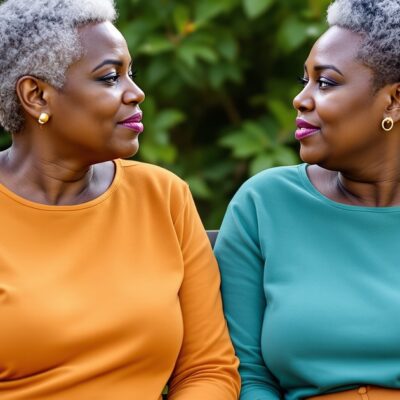
Illustration: AI-generated scene of an intergenerational conversation, not a photograph of StoryCorps participants.