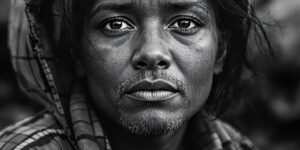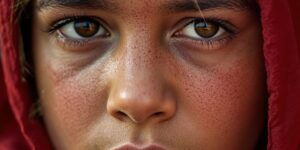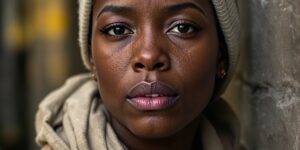
Her hands were trembling. Not from fear—fear had become background noise, like the hum of a refrigerator you stop hearing after a week. Her hands trembled because the chalk was down to a nub, and she had three more equations to teach before the lantern burned out. The cellar had no windows. The five children huddled around her did not know her real name, and she had decided it was safer that way. Outside, boots passed overhead. Inside, she wrote on the back of a flour sack, and a nine-year-old girl whispered the answer back perfectly.
This is what hope looks like when it has no audience. No timeline. No guarantee of a finish line.
Here is the truth that should stop us in our tracks: Antoni Gaudí began building the Sagrada Família in 1882. He worked on it for forty-three years. When he died in 1926, under the wheels of a tram, the basilica was less than a quarter finished. Today, it is still rising. The man who laid the first stone knew, with absolute certainty, that he would never see the last one set. He built anyway.
We have been sold a different script. Success must be visible by Friday. Impact requires a before-and-after photo. We measure our lives in quarterly returns, in follower counts, in bio updates that prove we have arrived. The idea of pouring your only life into something that will not bear fruit until your bones are dust feels, to the modern mind, like a sucker’s bet. Why plant an oak you will never sit under? Why teach a child you will never see graduate? Why fight for a climate that might stabilize two centuries after your death?
Because the script we have been sold is a lie, and it is making us sick.
The people featured in the latest issue of Positive News are not superhuman. They are not martyrs with halos forged in special metals. They are simply people who have looked the arithmetic of mortality in the face and chosen long division. A rewilding project in Scotland that will not become a true forest for eighty years. A secret school network operating in a nation where education is a crime, run by volunteers who know they may be arrested before the semester ends. These individuals have accepted the first brutal truth: your life is not a product launch. It is a relay race. The baton was handed to you bloody and half-broken, and your only job is to carry it forward with as much grace as you can muster before you pass it on.
You are not meant to see the finish line. You are meant to run. And the moment you stop demanding to see the finish line, your lungs open. Your shoulders drop. The panic loosens its grip.
The second brutal truth is harder to swallow. It is that nobody is coming to thank you.
Amara—let us call her that, though it is not the name on her frightened passport—has been teaching underground for four years. She has taught thirty-two children to read. Three of them have been arrested. One died in detention. She knows the statistics. She knows that if the regime falls in her lifetime, the historians will write about the rebels with guns long before they write about the women with chalk. She knows that if she is ever found, her name will be erased from the official record, and her students, if they survive, may never speak of her aloud for fear of association.
And yet.
There was a night, six months ago, when the generator failed and the cellar went pitch black. The children froze. In the darkness, a small boy asked the question she had been dreading: “Will the world outside ever be safe?”
She could have lied. She could have spun a fairy tale about spring and open windows. Instead, she told him the second brutal truth. “Maybe not for me,” she said. Her voice did not waver. “But for you. I am building it for you.”
The room went still. Then the girl beside him—twelve years old, already missing two fingers from a factory accident—reached into her pocket and pulled out a scrap of paper. She wrote the sentence down, pressing hard in the dark. The next morning, that scrap was taped above the doorway. It is still there. The students now recite it like a prayer before every lesson.
This is the architecture of real hope. It is not positive thinking. It is not a vision board. It is the choice to become a foundation stone that will be buried forever beneath the floor, holding up the house without ever seeing the family eat dinner inside.
The third brutal truth is the one that sets you free.
You have been carrying a terrible weight. You have been telling yourself that if you cannot fix it in your lifetime, you have failed. The oceans. The democracy. The broken family line. The forest. You have looked at the scope of the wound and concluded that your bandage is too small to matter. You have been measuring your contribution by what you can witness, and that is a rigged game.
Gaudí did not live to see his towers pierce the Barcelona sky. Amara may never know which of her students, if any, will change the world above. The rewilders planting saplings in Scottish peat will not photograph the canopy their great-grandchildren will walk beneath. But they sleep differently than the rest of us. Their rest is not the exhaustion of the defeated; it is the sleep of the released. They have surrendered the narcissism of the immediate. They have stopped asking, “What will this do for me?” and started asking, “What is mine to do?”
The answer to the latter question is always enough. It is always the only thing that has ever moved the world forward.
So plant the tree. Write the letter that will be read after your funeral. Teach the lesson in the dark. Start the project that your obituary will call “unfinished.” Hold the baton until your hand cramps, and then pass it forward with everything you have left.
The world does not need more people demanding to see the harvest before they sow the field. It needs more foundation stones. More lantern-light. More hands trembling not from fear, but from the gravity of work that outlasts the hand that holds it.
You will not get a closing credit. You will not stand at the ribbon-cutting of the future you paid for. You will not taste the fruit. But one day, a child you will never meet will walk through a door you built, will breathe air you cleaned, will read a word you risked everything to teach, and they will feel, for the first time in their lives, that the ground beneath their feet is solid.
They will not know your name. They will not need to.
The light will be on. That is enough.