My coffee had gone cold at exactly 7:42 AM. The headline on my screen said something about the hottest summer on record. Again. I closed the laptop so hard the table shook. On my kitchen table sat a magazine, still wrapped in plastic, sent by a friend who had scribbled on a sticky note: “Read this before you give up.” I almost threw it away. Almost. But the cover image stopped me. A group of children huddled in a basement classroom, learning to read by candlelight, somewhere in a corridor of the world where schools had been banned entirely. Secret schools. The caption beneath the photo read: “Building a future worth seeing, even if they never get to live in it.” I stared at those children’s faces. They weren’t smiling for the camera. They were concentrating. Hard. That was worse. That was better. Something about their focus made my chest tight. My apartment felt very small. The walls felt thin, like they were made of newsprint and weather reports. I poured the cold coffee down the sink and sat back down. I didn’t open my laptop. I opened the magazine. The plastic crinkled like a warning, or an invitation.
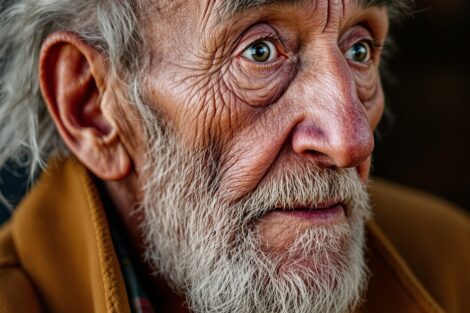
For five years, I have written viral content for a living. I know exactly which headlines make thumbs stop scrolling. Fear works. Outrage works. The slow collapse of everything you love works exceptionally well. Every morning I fed the machine, packaging dread into neat paragraphs that traveled farther and faster than anything hopeful ever could. I told myself I was just reflecting the world back to people. Holding up a mirror. But mirrors don’t have to participate in the burning house. I was inside the house, handing out gasoline in exchange for clicks. The magazine felt heavy in my hands. I read about a man in Wales who had spent forty years planting a forest he knew he wouldn’t live long enough to see mature. He started at age fifty. He was ninety now. “For the squirrels,” he told the journalist. “I’ll never meet them. But someone will.” I put the magazine down on my unmade bed. I looked at my hands. Thirty-four years old. I had never planted a single thing I did not expect to harvest. Not a tomato. Not a friendship. Not a career move. Everything in my life was structured around a return on investment before age forty. I was an extraction machine, pulling time and meaning and attention from every interaction before it had a chance to ripen. The issue had another story about architects designing floating neighborhoods for coastlines that wouldn’t flood for another hundred years. Scientists in freezing vaults preserving seeds for civilizations they would never meet. Who does that? Who wakes up on a Monday and works for a Tuesday in the year 2150? It seemed like a species of madness. Or a kind of love I had forgotten existed.
I decided to find out. I emailed the editor of Positive News and asked if I could meet one of the people from the issue. She connected me with Margaret. Seventy-one years old. For twelve years, she had been part of a collective turning abandoned industrial rail yards into wetlands. I met her on a Tuesday that smelled like iron and rain. We stood in mud up to our ankles, surrounded by skeletal reeds and the rotting smell of things becoming soil. Margaret leaned on her shovel and told me the water wouldn’t clear for another twenty years. The native fish wouldn’t return for thirty. “This won’t be a wetland until I’m gone,” she said. She told me about the secret schools from the magazine cover. Teachers working without pay, without protection, risking arrest to teach girls algebra and poetry in basements with no windows. “They know the girls might leave and never come back. They know the regime might outlast them. They do it anyway.” I felt something crack behind my ribs, a small fracture in the armor I had built from cynicism. I asked her why. She squinted at me like I had asked why she breathed. “Because despair is a luxury, Samantha. Hope is manual labor.” I stood in that mud and felt the weight of what she was saying. I had been treating hope like a feeling you wait for, like good weather or a tax refund. These people treated it like a shift you clock into, like digging a ditch in the rain. Margaret wiped her forehead and mentioned that nearly three out of every four trees planted in community rewilding projects are tended by people over sixty-five. The elderly are building the bridges we’ll walk across in fifty years. Not because they have more time. Because they have less left to lose, and more to give. I looked at her muddy boots. I wanted a pair just like them.
I went home and opened my laptop. For the first time in years, I didn’t check the headlines. I opened a blank document and started writing something I knew I wouldn’t publish for months, maybe years. A book about quiet builders. Not optimized for clicks. Not designed to go viral. Just a record of people choosing to act for a world they may never see. The words came slowly. They felt different. Heavier and lighter at the same time. I understood something as the cursor blinked in the white space. The secret school teachers, the forest planter, the wetland architect, the seed vault workers—they aren’t saints or heroes. They’re simply people who broke the spell of immediacy. They stopped asking “what’s in it for me?” and started asking “what’s in it for the person I won’t meet?” That question is terrifying in its openness. It is also the only question that makes the morning bearable. I looked at my cold coffee mug, still sitting in the sink from that morning. I washed it. I made a new cup. I wasn’t fixed. I wasn’t saved. But I was building.
That was six months ago. The magazine still sits on my desk, cover worn soft at the edges like fabric handled too often. I look at those children in their underground classroom sometimes, when the traffic is loud and the headlines are louder than my own thoughts. I keep writing. Some days I still write the fear because it is honest and it is real. But now I write the forest too. I write about the floating cities and the seed vaults and the muddy fields that smell like rot and resurrection. I write about people building a future worth seeing. Because I want to be one of them. Not famous. Not remembered in any plaque or ceremony. Just someone who left the door unlocked and the light on for whoever comes next. My coffee is warm now. It is 7:42 AM again. The world is still burning in places that need water more than words. But somewhere, in a basement or a muddy field or a glass vault buried in snow, someone is planting. Someone is teaching. Someone is building. And today, I choose to join them.