


The question hiding in a familiar pair of hands
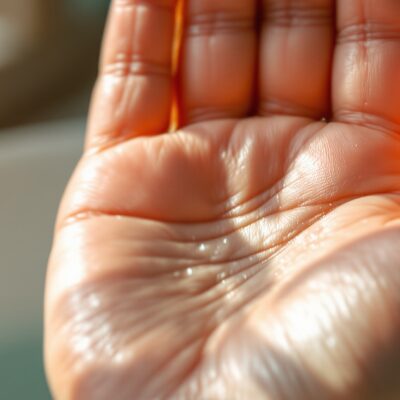
When did you last really look at your fingertips after a bath? Not just notice that they had gone wrinkly, but stop to wonder whether those little folds had appeared in exactly those places before?
It sounds like the kind of question a child might ask while an adult is reaching for a towel. There is no obvious urgency to it, no dramatic discovery waiting in plain sight, just an ordinary body doing an ordinary thing.
Yet a question like that helped send researchers at Binghamton University back to the water. According to the university’s account, a young questioner wanted to know whether fingers wrinkle the same way each time they are immersed.
Biomedical engineering researcher Guy German did not pretend to know. He and Rachel Laytin went on to investigate, turning something familiar enough to ignore into a question they could actually test.
That is what makes this story worth a second look. Most of us do not need convincing that wet fingers wrinkle; the interesting part begins when we realize that recognizing a change is not the same as understanding it.
And the answer was not simply another version of the explanation many people remember from childhood.
The explanation that leaves something out
The familiar account goes something like this: skin absorbs water, swells, and becomes wrinkled. It is an appealing picture because it makes our fingers sound like a household material left in the sink for too long.
But the mechanism described in Binghamton University’s report on the research involves something happening beneath the surface. Blood vessels contract after prolonged immersion, contributing to the folds we see above them.
This changes the question. If the appearance of those folds is connected to structures underneath the skin, perhaps the wrinkles are not just a new collection of random creases each time.
German’s explanation was that blood vessels do not change their positions very much relative to one another. That offered a reason to expect a similar arrangement of wrinkles when the same fingers were soaked again.
A plausible reason, however, is not the same thing as a result. The team still needed to compare actual fingers at different times rather than rely on what an explanation seemed to predict.
There is something reassuring about that distinction. You do not have to begin with a spectacular mystery to do useful science, and you do not have to treat a confident-sounding explanation as the end of a conversation.
Sometimes the next step is simply to ask what you would expect to see if that explanation were right. Then you look carefully enough to find out whether it happens.
They waited, took photographs, and came back
The procedure described in the university report was straightforward. Participants immersed their fingers in water for 30 minutes, and the researchers photographed the resulting wrinkles.
Then they repeated the immersion under the same conditions at least 24 hours later. That gap mattered because the aim was not merely to photograph the same wet hand twice in quick succession.
They wanted to compare separate episodes of wrinkling. Would the raised areas and folds return in a recognizable arrangement, or would the surface take a different shape?
The photographs gave them something firmer than memory. Anyone trying to remember a tiny crease from the previous day can appreciate why an image comparison is more useful than a quick glance and a feeling of familiarity.
Sci.News also described the experiment, reporting that the same patterns of raised loops and ridges appeared after both immersions. Its coverage identifies the paper as a 2025 study by Rachel Laytin and Guy K. German in the Journal of the Mechanical Behavior of Biomedical Materials.
Those two reports concern the same research, not two independent experiments. That matters: hearing a finding described in more than one place does not, by itself, mean another team has replicated it.
The design also gives the finding its proper boundaries. This was a comparison under repeated conditions, not a demonstration that every fold remains identical throughout a person’s entire life or in every possible kind of water exposure.
The result is interesting without making it bigger than the evidence supports. The team had taken a small, specific question seriously enough to produce a specific answer.
The familiar folds were not as random as they looked
The answer was that the patterns repeated. In the conditions studied, fingers returned to the same arrangement of raised loops and ridges after separate immersions.
It is tempting to turn that into a poetic claim that the body remembers every bath. But the explanation offered by the researchers is more physical: relatively stable structures beneath the skin help produce a repeatable pattern above it.
The report included another observation that makes the simple sponge explanation less satisfying. A student with median nerve damage was tested, and the researchers observed no wrinkling in the affected fingers.
That observation fits the broader point that water-induced wrinkling involves more than passive soaking. It is not, however, an invitation to diagnose yourself by timing a bath or comparing your hands with someone else’s.
A research observation and a home medical test are very different things. Questions about a persistent change in sensation or skin belong with a qualified clinician, not a viral photograph.
German also discussed possible future applications in forensics, including challenges related to fingerprints after prolonged water exposure. Those are potential uses worth exploring, rather than proof that the study has already delivered a new identification method.
What the work has already delivered is simpler and, in its own way, more satisfying: evidence that an everyday feature of the human body was hiding a repeatable detail.
What ordinary thing would you ask about next?
The most memorable part of this story may not be the wrinkles at all. It may be the moment an expert was asked a question and did not already have an answer.
There is room for that moment in ordinary life, too. A child asking about fingers is not necessarily interrupting the useful part of the day; sometimes the question is the useful part.
You do not need to turn your bathroom into a laboratory to take something from this. Nor do you need to spend longer in the water or chase a perfect photograph of your skin.
The invitation is simply to notice the difference between something being familiar and something being fully understood. We encounter our own bodies constantly, but that does not mean every small feature has stopped being interesting.
For anyone who has ever been embarrassed to ask an apparently silly question, that is a gentle correction. The question does not become worthless just because its subject is small, and uncertainty does not become failure just because someone knowledgeable admits it.
Next time those familiar folds appear, you might see more than a reason to reach for a towel. You might see an example of what happens when somebody pauses instead of shrugging.
What ordinary thing about the human body have you always wondered about, but never thought was worth asking?