At 2:14 on a Wednesday morning, my laptop was the only light in the room. I had clicked a link promising forty-two weird facts, expecting nothing more than a quick dopamine hit before sleep. The first few were cute. Then one stopped me cold: there are more trees on Earth than stars in the Milky Way—roughly three trillion of them. I set the computer down and stared out the window at the single oak in my neighbor’s yard. I had walked past that tree a thousand times and never once considered that I did not understand it at all.
That is the thing about weird facts. They do not just add information. They rearrange the furniture inside your head.
I used to be the person who collected facts like trophies. At dinners, I corrected people’s pronunciation of obscure writers. I kept a mental ledger of things I knew and things other people got wrong. School had rewarded me for it. The internet had fed me lists that made me feel like the world was a puzzle I was quietly solving. I thought intellectual humility was something you said in a job interview, not a way of living.
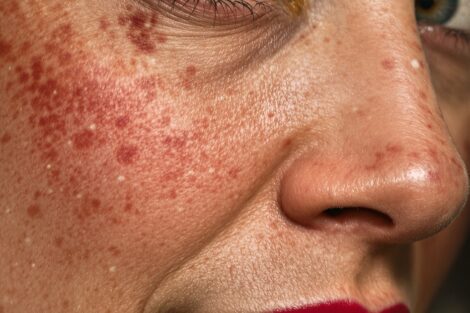
Then I read that the human body sheds about forty pounds of skin in a lifetime. Most of the dust in your home is made of dead skin cells that once held your memories, your blush, your sunburns. I looked at the windowsill. I did not see dirt anymore. I saw a slow autobiography, flake by flake, falling off while I answered emails.
That was the first truth: the world is much closer to you than you think. It is under your fingernails. It is in the air you breathe. We talk about nature as if it is a place you drive to, but you are already inside it. You are producing it. The boundary between “me” and “everything else” is more negotiable than it feels at nine in the morning with a coffee in your hand.
The second truth arrived with honey. Archaeologists have found pots of honey in ancient Egyptian tombs that are still edible after three thousand years. Honey never spoils. It outlasts empires, languages, and every person who ever dipped a spoon into it. I sat with that fact longer than I expected. Something in my chest loosened. I am always bracing for expiration—for milk, for trends, for my own energy by Thursday afternoon. But here is a food that says, quietly, not everything ends on a schedule.
Of course, the universe balanced that comfort with something deeply unsettling. A teaspoon of matter from a neutron star weighs about six billion tons. Six billion. The same spoon I use for my morning yogurt could hold more weight than every human being who has ever lived, if it were scooped from the right place. I walked into the kitchen and picked up a teaspoon. It looked back at me, innocent and ridiculous. The universe, I realized, does not care whether its scale makes me comfortable.
That was the third truth: scale is not your friend. We are wired for the size of a kitchen, a commute, a loved one’s face. But reality keeps happening in sizes we cannot feel. Mountains move. Continents drift apart at the speed your fingernails grow. Light from the sun takes eight minutes to reach us, which means every sunny afternoon is a letter written in the past. Our brains are local newspapers trying to cover a cosmic weather system.
The fourth truth came dressed as a joke. Turtles can breathe through their rear ends. Crows remember human faces for years and will teach their friends which humans to avoid. Bananas are berries, but strawberries are not. Octopuses have three hearts and blue blood. The mantis shrimp can see colors we do not even have names for. Reading these, I laughed. Then I stopped laughing. I had been assuming the animal kingdom was a simpler version of us, but it is not. It is a collection of private experiments, each one solving the problem of being alive in a way I cannot imagine. We are not the center of the interestingness. We are one weird entry in a very long catalog.
And that is when I felt it—the genuine human ache underneath all the trivia. I remembered my grandfather sitting on his porch, shelling peanuts, telling me for the hundredth time that the smartest thing a person can say is “I don’t know.” I rolled my eyes when I was fifteen. I was sure he was just making excuses for people who did not read enough. Now, at thirty-three, with a glowing screen showing me how little I understand about trees and honey and the weight of stars, I missed him so much my throat tightened. He had known something I was only now learning.
The fifth truth took the longest to arrive. It came not from a single fact but from the cumulative weight of all of them. The world does not need me to approve of it. It does not care if I find it spooky or beautiful or inconvenient. It simply is, in all its strange specificity, and my job is not to master it. My job is to keep paying attention.
I used to think intelligence was the ability to explain things. Now I think it might be the ability to stay surprised. A person who can look at a tree, a teaspoon, a crow, and still feel wonder is doing something harder than memorizing names. They are letting the world remain real. They are resisting the urge to flatten everything into a listicle and move on.
The weird facts did not make me feel smaller. They made me feel less lonely. If the universe contains three trillion trees and honey that lasts millennia and creatures breathing through unexpected openings, then weirdness is not a defect. It is the baseline. I am weird. You are weird. The fact that we can sit here, made of stardust and shed skin, reading about ourselves in the dark, is perhaps the strangest fact of all.
I closed the laptop at 3:02. The oak outside was still there. I still did not understand it. But for the first time in a long while, I did not need to. I could just let it be a tree, and let myself be someone who was willing to be amazed by it. That was enough. That was everything.