



A snack test with an unexpected participant
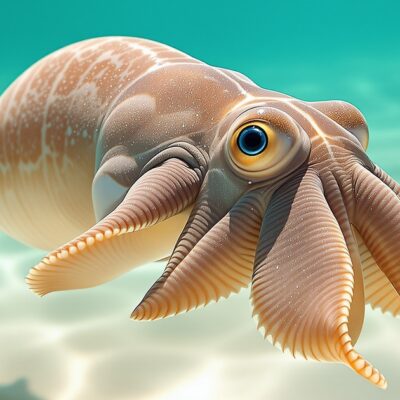
A cuttlefish can resist an available meal while waiting for something it likes better. In a study published in 2021, some held out long enough to make the researchers look more closely at a creature whose mind is very different from our own.
The experiment sounds almost playful: put food in front of an animal, offer a better option later, and see what happens. But that little gap between wanting and taking is where the interesting question begins.
We tend to recognise intelligence most easily when it comes in a familiar package. An animal looks at us, uses an object, or behaves in a way we can compare with a child, and suddenly its decisions seem worth watching.
A cuttlefish offers none of that easy resemblance. Yet researchers at the Marine Biological Laboratory in Woods Hole gave these animals a choice that made a surprisingly familiar problem visible beneath the water.
This was not a demonstration that a sea creature thinks exactly like a person. It was a carefully arranged opportunity to discover whether an immediate reward would always win, and what a different answer might tell us.
Two meals, but only one could come first
According to the University of Cambridge’s account of the experiment, common cuttlefish, or Sepia officinalis, encountered two separate transparent chambers. One contained a piece of king prawn that was available immediately; the other held a live grass shrimp, the preferred option.
Getting the shrimp required waiting without eating the prawn. The choice was not between a meal and nothing at all, which makes the task more revealing than simply measuring how long an animal sits still.
The researchers started with a delay of ten seconds and increased it in ten-second steps. A wait that was manageable at the beginning could become too much as the better food remained out of reach.
There were six participating cuttlefish. Cambridge also reported that two additional animals recruited for the study did not take part, a useful reminder that this was a small experiment rather than a census of cuttlefish abilities.
The design was inspired by the marshmallow test, in which children face a choice between an immediate treat and a larger reward after waiting. Here, the foods and apparatus had to suit a very different animal.
Calling it a marine marshmallow test helps explain the basic dilemma. It does not make the two experiments identical, or turn their results into a competition between children and cuttlefish.
The pause was not the only surprise
All six participating animals demonstrated the ability to wait for their preferred food. Their maximum tolerated delays ranged from fifty to 130 seconds, according to the Marine Biological Laboratory’s report on the research.
That upper limit means some could resist the available option for more than two minutes. It is a small stretch of time on a clock, but a meaningful one when the easier reward is already there.
The researchers also noticed something particularly memorable: cuttlefish turned their bodies away from the immediately available food. Cambridge described the behaviour as looking as though the animals were distracting themselves from eating it.
That observation is tempting to translate into a private conversation: don’t look, don’t give in, just wait. But nobody recorded an animal thinking those words, and the movement does not prove that its internal experience matched ours.
There was a second task, too. The cuttlefish learned to associate a visual marker with a food reward, using dark grey and white markers whose positions varied in the tank.
Once an animal had learned the association, the researchers changed the rule. The reward now went with the other marker, requiring the cuttlefish to adjust instead of continuing with the previously successful choice.
The animals that waited longer in the food test also performed better at learning the associations and adapting to the switch. The study therefore connected two measured abilities, rather than relying on the charm of a creature refusing a snack.
Still, a relationship between performance on two tasks is not proof that waiting causes better learning. Nor does it give each animal a universal intelligence score that explains everything it can do.
The explanation may begin with staying hidden
The researchers proposed that the answer might lie in how cuttlefish survive. Remaining camouflaged, then emerging for brief feeding opportunities, could make selective timing especially valuable.
Leaving concealment to forage exposes an animal to predators. If that move carries a cost, there may be an advantage in holding back for food worth the risk rather than striking at every available opportunity.
In the laboratory’s account, lead researcher Alexandra Schnell presented this as a possible evolutionary explanation. It was a hypothesis about how the ability developed, not something the snack experiment alone established.
That distinction makes the story more interesting, not less. The result raises the possibility that similar-looking cognitive abilities can arise in animals with very different lives and evolutionary histories.
We do not have to imagine a cuttlefish making human resolutions to appreciate the finding. Its own problems may be demanding enough to favour behaviour that looks, in this setting, remarkably controlled.
There are limits to what six animals can tell us. Their performance under trained laboratory conditions cannot stand in for every individual, every food choice, or every situation in the sea.
And the two institutional reports describe the same study, published in Proceedings of the Royal Society B. They are not independent experiments confirming the result, and this is a look back at 2021 research, not an announcement of a new discovery.
A different way to look at an unfamiliar mind
The emotional pull of this story is not that cuttlefish are secretly little humans. It is the possibility that a behaviour we recognise can belong to a life we barely know how to imagine.
There is something humbling about needing an experiment before taking an unfamiliar animal’s decisions seriously. Appearance can make a creature seem distant long before we have asked a fair question about what it can learn.
That does not mean every pause is wisdom, or every animal action conceals an elaborate plan. Careful observation matters precisely because our first explanations can be both too dismissive and too sentimental.
The researchers offered a choice, measured the waiting, and compared it with learning. The result is more useful than a grand claim that the ocean contains a better version of human willpower.
It also leaves us free to feel wonder without turning the animals into a lesson about personal discipline. Nobody struggling with temptation needs to be told that a cuttlefish is doing life better.
What deserves to stay with us is simpler: in front of an available meal, these animals did not always take the immediate option. A little space opened between opportunity and action, and researchers found something worth understanding inside it.
The next time an unfamiliar creature seems too strange to relate to, that pause offers a useful thought. Perhaps the first thing missing is not intelligence on its side of the glass, but a better question on ours.