


The loaf that seems to have missed its moment
What do you do with the last piece of bread when it has gone too firm for a sandwich? It is a small kitchen decision, but it can carry an irritating feeling: something perfectly good has slipped past the moment when you knew what to do with it.
Perhaps your household makes breadcrumbs, toast, or a pudding. In Tuscany, there is another answer, and the bread is not an afterthought perched beside the bowl.
Ribollita is a vegetable-and-bean soup in which stale bread becomes part of the meal itself. The intriguing detail is that the first cooking is not necessarily the point at which the dish is considered finished.
This is food with a second act built into its name. Before getting to that second act, though, it helps to understand why a loaf that has lost its softness can still have something useful to give.
There is no need to turn dinner into a test of thrift or to feel guilty about every ingredient that goes unused. But a practical recipe can offer something more helpful than guilt: a clear next step, a warm bowl, and one less decision at the end of a long day.
A familiar problem, answered differently
The official Visit Tuscany recipe, contributed by Juls’ Kitchen, places ribollita in the countryside tradition of cucina povera, or simple cooking. It describes seasonal vegetables and leftovers being used to make filling meals.
That context matters more than a romantic picture of a rustic kitchen. Resourcefulness is valuable, but the need to stretch food is not automatically charming, and there is no reason to pretend that cooking from necessity was effortless.
What survives in this recipe is useful knowledge: beans can give a soup substance, vegetables can build its flavor, and bread can become its thickener. An ingredient does not have to perform its original job to remain worth keeping.
Visit Tuscany’s version includes cannellini beans, cavolo nero, Savoy cabbage, potato, carrot, celery, and stale Tuscan bread. Some beans are blended, while others stay whole, creating a mixture of smoothness and texture without requiring cream.
There is also room for a quicker interpretation. Esther Clark’s Tuscan-style ribollita for Good Food uses canned beans, chopped tomatoes, stock, and torn bread, with a short stovetop cooking time.
Those two recipes are not identical, and they do not need to be. One gives a fuller picture of the regional dish; the other offers a manageable route into its basic idea on an ordinary evening.
Build the bowl before you rush the bread
The following straightforward home version is adapted from Clark’s recipe, with the optional cheese omitted. It makes approximately four generous portions, depending on appetites and what else you serve, and takes about 40 minutes including preparation.
Gather these ingredients:
- 2 tablespoons olive oil, plus a little extra for serving
- 1 onion, finely chopped
- 2 celery stalks, finely chopped
- 1 carrot, chopped small
- 2 garlic cloves, crushed or finely chopped
- A small pinch of dried chili flakes, optional
- 1 sprig fresh rosemary
- 1 can chopped tomatoes, 400 grams
- 500 milliliters vegetable stock, plus extra water as needed
- 1 can cannellini beans, 400 grams before draining, drained and rinsed
- 250 grams cavolo nero or kale, tough stalks removed and leaves chopped
- 150 grams stale crusty bread, torn into small pieces
- 1 tablespoon red wine vinegar, or less to taste
- Salt and black pepper, to taste
Use bread that is dry or firm, not moldy. This is a way to use staleness, not to rescue food that has spoiled; if the loaf has mold, discard it rather than trimming a piece for the soup.
1. Soften the base. Warm the oil in a large saucepan over medium heat, then add the onion, celery, carrot, and a small pinch of salt. Cook for about 15 minutes, stirring regularly, until softened rather than browned.
2. Add the aromatics. Stir in the garlic and optional chili, and cook for about a minute. Have the tomatoes ready so the garlic does not sit in the hot pan long enough to burn.
3. Make the soup. Add the rosemary, tomatoes, stock, and drained beans, and bring to a gentle simmer. Stir in the greens, cover, and cook for about 10 minutes, or until the leaves are tender enough for you.
4. Let the bread join in. Add the torn bread and stir gently for several minutes, allowing it to absorb liquid and warm through. If the mixture becomes thicker than you want, loosen it with a little water or extra stock.
5. Finish thoughtfully. Remove the rosemary stem, add the vinegar gradually, and taste before adjusting the salt and pepper. Spoon into bowls and finish with a small drizzle of olive oil.
The name tells you what comes next
Good Food specifically recommends stale crusty bread because it can hold some structure while absorbing the liquid. Very fresh bread, its recipe notes, can become a soggy paste instead.
So the bread’s apparent disadvantage is part of what makes it useful here. You are not trying to persuade an old loaf to become a new loaf; you are giving it a different task.
Then comes the detail in the name: ribollita means reboiled or recooked. Visit Tuscany describes the vegetable-and-bean soup being thickened with stale bread and cooked again the next day until dense.
The quick recipe above is a Tuscan-style starting point you can eat immediately. If you save a portion, cool it promptly in shallow containers and refrigerate within two hours; do not leave the pot on the stove overnight in pursuit of tradition.
Reheat only what you plan to eat, adding a splash of water if needed and stirring so the thick soup does not catch. Heat it thoroughly throughout; leftovers should reach 165°F or 74°C.
A second meal without a grand lesson
Not every dinner needs to change your life. Sometimes the worthwhile change is simply finding a reliable use for the half-loaf you would otherwise keep moving around the counter.
There is something generous about a dish that leaves room for that imperfection. It does not demand the freshest bread or an elaborate centerpiece before it can become a meal worth sharing.
That is not an argument for buying special ingredients just to save one inexpensive item. Look at what you have, decide whether this combination makes sense for your kitchen, and keep the idea for another day if it does not.
If it does, the payoff is concrete: a pot of vegetables, beans, and bread that can feed you now and offer a properly stored portion for tomorrow. Practical care often looks less like a dramatic gesture and more like making the next meal a little easier.
What is the dish in your household that begins with something another person might throw away? The answer might be a recipe, but it might also be the name of the person who taught you to see that ingredient differently.
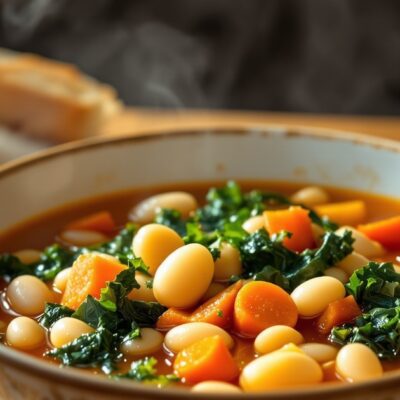
Image: AI-generated illustration of a Tuscan-style bread-and-bean soup, not a documentary photograph of the cited recipes.