
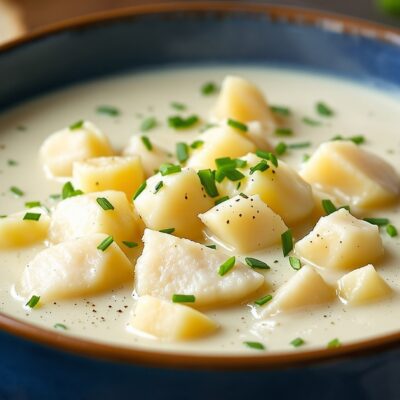




Featured image: AI-generated food illustration, not a photograph of a tested batch or a particular kitchen in Cullen.
A creamy soup with something missing
A comforting bowl of Scottish fish soup can be made without pouring in any cream. That is the small surprise in a straightforward Cullen skink recipe: the shopping list looks almost too short for the kind of supper its name promises.
There is smoked haddock, an onion, potatoes, milk and butter. Nothing especially elaborate, no long list of spices, and no instruction to spend the afternoon making stock before dinner can even begin.
For anyone who has looked into the fridge and felt that feeding people properly requires more energy than they have left, that simplicity matters. A meal can feel generous without demanding a performance from the person making it.
But Cullen skink is not simply a convenient soup with an unusual name. It belongs to a real place, and the story told there gives those ordinary ingredients a different weight.
The interesting question is not how to make a humble dish seem expensive. It is how a few available ingredients became something people wanted to keep making, sharing and defending long after the original necessity had passed.
The place behind the name
Cullen is a coastal town in Moray, in northeastern Scotland. Its name travels with the soup, keeping the dish connected to the community even when it appears on a menu far from the coast.
According to Discover Cullen’s account of the dish, local households turned to plentiful smoked haddock when hard times made beef harder to afford in the early 1890s. The town’s fishing background and production of smoked haddock helped shape what could go into the pot.
That is the local origin account, rather than a reason to invent a single dramatic evening when somebody first discovered the recipe. Food traditions often arrive through repeated household decisions, not a neatly documented moment of invention.
The community’s own description also remembers the wives and mothers who made the soup for their families. It is a useful correction to the way food stories sometimes celebrate an ingredient while overlooking the people who repeatedly turned it into dinner.
There is nothing romantic about being unable to afford food. Resourcefulness deserves recognition without pretending the pressure behind it was desirable, or that a satisfying recipe could remove the hardship.
What remains worth celebrating is the skill: knowing what was available, making it stretch, and learning how to turn familiar things into a meal people actually wanted. That kind of knowledge is easy to underestimate because it happens in kitchens rather than on a stage.
Cullen gives this particular kitchen knowledge a stage anyway. Its world championships include traditional and twist categories, a reminder that a short ingredient list does not stop people caring deeply about the result.
What to gather before the pan gets hot
The version below follows the quantities and basic method of Philip Allan’s member recipe published by Good Food Middle East. It serves four and lists about ten minutes of preparation and thirty minutes of cooking.
This is a practical home version, not a claim to settle every local argument about the correct soup. Some cooks use cream; this particular recipe does not need it.
- 1 tablespoon unsalted butter
- 1 medium onion, peeled and finely chopped
- 400 grams potatoes, peeled and cut into roughly 1-centimeter cubes
- 300 milliliters water
- 250 grams smoked haddock
- 250 milliliters whole milk
- Half a small bunch of parsley or chives, finely chopped
- Black pepper and salt, only as needed after tasting
- Crusty bread to serve, if wanted
Smoked haddock is the defining flavor here, not an interchangeable decoration. If you use a different fish because that is what your shop carries, it may still make a pleasant supper, but expect a different result rather than an identical Cullen skink.
Keep the potato cubes reasonably even so they soften at a similar pace. There is no prize for cutting them perfectly; the aim is to avoid finding one stubbornly firm chunk among pieces that are already falling apart.
Have a second saucepan, a slotted spoon and a plate ready for the fish. The separate pan is not needless fuss: it lets you cook the haddock gently while the potatoes take the time they need.
The step that brings the two pans together
Start by melting the butter over medium heat in the larger saucepan. Add the chopped onion and cook for five to eight minutes, stirring as needed, until softened and translucent rather than browned.
Add the diced potatoes and the measured water. Bring the pan to a boil, reduce the heat and let it simmer for ten to fifteen minutes, until the potatoes are tender when pierced.
While that happens, put the haddock in the other saucepan with the milk. Cook gently for about five minutes, or until the fish is cooked through and flakes easily; thicker pieces may need longer.
Lift the fish onto the plate with a slotted spoon, keeping the milk in the pan. Once the haddock is cool enough to handle, separate it into generous flakes and carefully remove any bones and skin.
Now pour the reserved milk into the potato mixture and add the fish. Warm everything gently together for another five minutes, avoiding vigorous stirring that would break every flake into tiny pieces.
This is the detail worth noticing: the milk used to cook the fish is part of dinner, not something to discard. Bringing it into the potato pan carries the flavor of that first cooking step into the finished bowl.
Taste before adding salt, since smoked fish already brings seasoning. Finish with pepper as desired and scatter the chopped parsley or chives over the soup just before serving.
The result should not have to look like a restaurant photograph. Tender potato, recognizable pieces of fish and enough broth to welcome a piece of bread are a much more useful destination.
A meal does not have to prove anything
There is a temptation, when a recipe seems this simple, to keep adding things until it feels sufficiently impressive. An extra garnish, another ingredient, a more complicated technique: something to demonstrate that you made an effort.
Cullen skink offers another possibility. Care can show up in the small decisions already inside the recipe: letting the onion soften, checking the potatoes, keeping the fish gentle, and tasting before seasoning.
None of that requires you to pretend you grew up in a Scottish fishing household. You can learn from a food tradition while naming where it comes from and respecting the people who kept it alive.
You also do not have to turn dinner into a lesson for everyone at the table. Put down the bowls, offer the bread, and let people eat while it is warm.
On a difficult evening, that may be enough of an achievement. A short shopping list has become something substantial, and the person making it has not had to disappear into the kitchen for hours to make everybody feel fed.
The surprise is not that ordinary ingredients can be disguised as something grand. It is that, handled with a little attention, they may never have needed disguising at all.