



The job is small. The shopping list is not.
You need to sand one tired chest of drawers, clean a carpet, or shorten a pair of trousers. Before you have even begun, the task seems to require another purchase, another cupboard, and another object you may barely touch again.
That is an ordinary frustration, not a personal failure. Having a home does not mean having room for every machine that might occasionally make life easier.
In south London, a project took that problem seriously enough to put something unexpected alongside the familiar business of borrowing books. At Upper Norwood Library Hub in Crystal Palace, residents could borrow useful household objects instead.
There were drills and cleaning equipment, but also things for enjoyment. When Positive News reported on the launch in May 2018, the collection included an ice cream maker and a ukulele.
It is a cheerful image: a library helping with both a stubborn household chore and a possible new hobby. Yet the more interesting part is not the unusual inventory.
It is the question underneath it. If you only need an object for a short time, why must getting access to it mean becoming responsible for it forever?
A different answer to an everyday problem
According to the 2018 Positive News report, the Crystal Palace collection opened with 50 items following a crowdfunding campaign supported by 291 people and organisations. The campaign raised £9,375.
Those figures describe that launch, not the service’s current size or prices. They also show that this was not simply a company placing equipment in a convenient room.
The project brought together the Library of Things social enterprise, Upper Norwood Library Hub, and the local grassroots network Crystal Palace Transition Town. Residents and organisations helped make the shared collection possible.
The social enterprise had begun experimenting with sharing in nearby West Norwood in 2014. Positive News reported that an earlier demonstration site had loaned items more than 2,500 times to 850 borrowers over an 18-month period.
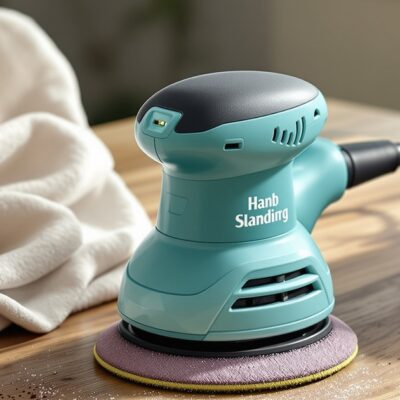
At the Crystal Palace launch, a local father described plans to borrow a hand sander for a chest of drawers while his children could borrow a kite and ukulele. His practical objection to buying everything was straightforward: there was not enough space at home.
You do not need to treat that household as a symbol of everyone. Still, the difficulty is recognisable: an object can be useful without being useful often enough to justify owning it.
The project made room for that distinction. It offered a way to finish the job without turning every occasional need into a permanent possession.
The equipment is only the beginning
Putting a drill on a shelf is the visible part. Making shared equipment dependable is a less photogenic task, and an essential one.
Someone has to choose suitable items, keep them working, explain how borrowing works, and make sure the next person receives something usable. A lending collection is not maintained by good intentions alone.
The 2018 account also described practical skill-sharing activities, including mending meet-ups, repair parties, and DIY classes. People could volunteer in roles connected with welcoming borrowers, fixing equipment, spreading the word, or sharing skills.
Those were features reported at that stage of the project; they should not be mistaken for a promise that every location offers the same events today. Their importance to the story is what they reveal about the original idea.
A machine does not automatically give someone confidence. Access to knowledge can matter alongside access to equipment, especially when an unfamiliar tool makes a manageable project feel intimidating.
The Library of Things website now describes a process built around joining online, reserving an item, collecting it from a self-service locker, and returning it clean for the next borrower. It also points people toward project ideas, online guides, and DIY and repair skills.
The site says its fixers select high-quality tools that can be repaired. That is the organisation’s stated approach, not a guarantee that any particular borrowed item will never fail.
Even so, there is a useful shift in responsibility here. Instead of each household having to purchase and store the same rarely used object, a service takes on the work of making access repeatable.
What changes when owning is not the only option?
The obvious benefit is avoiding a purchase. But the quieter benefit may be permission to approach a small project differently.
Consider a hypothetical beginner who wants to try sewing a simple repair. Buying a sewing machine means deciding whether an uncertain interest deserves money and space before they have much experience.
Renting one, where available and affordable, changes that decision. The person can evaluate a particular task rather than commit to a whole new identity as someone who sews.
That is an interpretation of the model, not a measured finding about every borrower. Neither the launch story nor the operator’s website establishes that borrowing makes everyone more confident or more connected.
It also will not be the best choice for every household. If you use a tool frequently, owning it may make more sense; if collection is difficult or the item is unavailable when needed, renting may not solve your problem.
Current costs, opening arrangements, availability, and borrowing conditions need checking before making plans. A price quoted in a launch article from 2018 is not a reliable price for a project today.
Those limits do not weaken the useful idea. They make it practical: buying is one option, borrowing from someone you know is another, and organised rental can provide another route.
The encouraging part is not that possessions are bad. It is that a missing possession does not always have to be the end of an idea.
Start with one thing you actually need
You do not have to transform your whole life around sharing to learn something from this project. Start with the next object you are considering buying for a single task.
Ask how often you would realistically use it, where it would live afterward, and whether there is a trustworthy local way to borrow or rent it. Compare the full cost, including travel, rather than assuming that rental is automatically cheaper.
If you do borrow, read the instructions and safety guidance before using unfamiliar equipment. Check the return arrangements, leave enough time to clean it, and report problems rather than passing them silently to the next person.
That last responsibility is part of what makes the idea worth considering. The next borrower is not an abstract beneficiary; they are someone with their own unfinished task and limited time.
A useful shared resource asks people to think beyond the moment they collect it. Returning something ready for another household is a modest act of consideration, without requiring a dramatic gesture or an inspiring speech.
The Crystal Palace launch began with objects people could pick up and take home. Its lasting question reaches beyond the shelves: what could become possible if needing something did not always mean having to own it?
And in your neighbourhood, which rarely used object would you most like to find available when you need it?
Image: AI-generated illustration of household tool sharing, not a photograph of a Library of Things location or participant.