




A small animal with firm boundaries
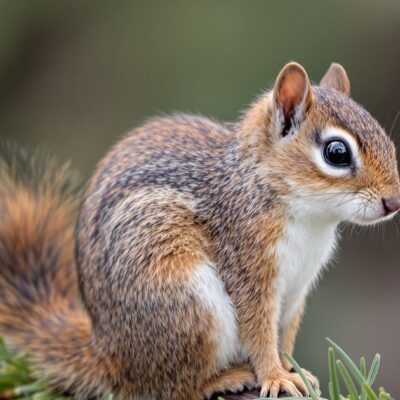
A red squirrel does not usually look like a welcoming neighbor. In the Canadian Yukon, these small animals defend food territories, answering intruders with calls and, sometimes, a chase.
That makes a discovery from a long-running field study especially striking. Among thousands of litters, researchers found a handful of young squirrels being raised by a female who was not their mother.
It would be easy to turn that observation into a sweeping story about woodland kindness. The actual research is narrower, more complicated, and, in its own way, more moving.
Published in 2010, the study documented five adoptions across 19 years and 2,230 litters. Those numbers matter: this was a rare exception, not the everyday arrangement of a hidden squirrel nursery.
The animals involved were North American red squirrels, not every squirrel species a person might see outside a window. And the researchers were not guessing from a cute photograph of two animals sharing a branch.
They had followed births, identified individuals, and built records of family relationships. When an unfamiliar youngster appeared beside a nursing female, there was a way to ask where it had come from.
The answer would reveal a surprising limit to the squirrel’s fiercely defended boundaries. But first, the team needed to establish that these really were adoptions.
The youngster that did not quite fit
The original paper in Nature Communications describes adoption as caring for another female’s offspring through weaning. That is much more specific than tolerating a visitor or briefly sharing a nest.
In four cases, identified young squirrels were observed nursing from, or nesting with, the new female and her offspring. They were old enough to be emerging from the nest, but had not yet reached the usual weaning age.
The fifth case offered a different clue. Researchers checking a nest found one juvenile that was unusually large compared with the others.
Its size, sex, and identifying ear notch suggested that it belonged to a neighboring litter born six days earlier. Tissue samples allowed the researchers to check that possibility rather than leave it as an appealing guess.
The genetic evidence matched the youngster to the earlier litter. It did not match the adoptive female as its mother.
A six-day-old squirrel could not have made the journey to another nest on its own. The researchers therefore inferred that the new female had carried it there, while clearly presenting that explanation as an inference rather than a journey they had watched.
That distinction is easy to lose in retellings. The evidence is compelling without adding an imagined rescue scene, a cry in the trees, or a mother making a decision in human words.
A small animal had ended up receiving care in another nest. The records could explain whose young it was, and that made the next question possible.
Five exceptions, and one shared connection
All five adoptions involved relatives. According to McGill University’s account of the research, the adopted youngsters included nieces, nephews, siblings, and grandchildren of the females raising them.
That family connection was not just a detail added to make the story sweeter. It was central to the scientific explanation.
In each adoption case, the researchers could identify several nearby nursing females who might have served as an adoptive mother. Only one of those candidates was a relative.
The team also looked for cases in which adoption could have happened but did not. They identified 29 additional litters whose mother had died and where a potential surrogate was available, yet no adoption occurred.
In only two of those cases was a related female available. Being family did not guarantee a rescue, and the study did not suggest that every orphan had someone waiting nearby.
This is the harder part of the finding. Nature did not provide a happy ending for every nest, and a truthful account cannot quietly leave those absences out.
Still, the five observed exceptions were meaningful. A species known for keeping others away sometimes brought a relative’s youngster into its own care.
The researchers wanted to understand how that behavior could persist when raising an extra juvenile came with real costs.
Why taking one more youngster mattered
A nursing female has limited resources. Adding another youngster can reduce the survival prospects of the offspring she is already raising, so adoption is not automatically beneficial to her own litter.
The study used long-term breeding and survival records to estimate those costs. It compared them with the benefit to the adopted youngster, taking the degree of relatedness into account.
This is the idea behind kin selection: helping a relative survive can contribute to the persistence of shared genes. It does not require an animal to count relatives, understand genetics, or consciously calculate a return.
In the observed adoptions, the estimated benefits, adjusted for relatedness, outweighed the costs. In the two cases where a related female was available but did not adopt, the researchers’ analysis predicted the opposite.
Each adoptive female took in just one orphan. That limit also fitted the costs and benefits described in the paper.
None of this tells us exactly what a squirrel feels. Evolutionary explanations describe patterns in survival and reproduction; they are not transcripts of an animal’s private experience.
There was another open question, too: how did the females recognize the family connection? The paper explicitly said the mechanism was unknown.
The researchers proposed that a female might recognize the missing mother as a relative, rather than directly assess the orphan. The university account discussed familiar calls as a possible clue, but the proposed sequence still needed testing.
So the story is not that scientists proved squirrels hear a relative disappear and immediately organize a rescue. What they established was rarer and more precise: documented adoption, directed toward kin, under particular conditions.
A different way to look at the neighbor
There is something worth keeping in that precision. The finding does not become less touching because it has an evolutionary explanation, or because the researchers refused to claim access to a squirrel’s thoughts.
A youngster still received milk and a place in another nest. A female already raising young still provided care for one more.
The evidence also changes the picture without replacing it with a fantasy. Red squirrels remained territorial animals; five unusual events did not erase years of defensive behavior.
Instead, the long study showed that the familiar picture had exceptions. Without patient records, those exceptions might have looked like a mistake, an odd visitor, or something too brief to understand.
Perhaps that is the most useful invitation here: not to assume that every animal is secretly behaving like us, but to leave room for behavior we have not noticed yet.
The next squirrel defending its patch of trees may still want everyone else to keep their distance. The research simply reminds us that, sometimes, even that boundary can make room for another small life.