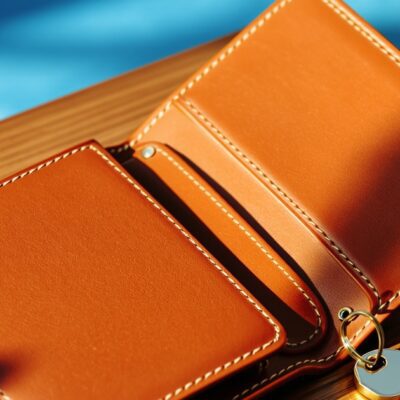





The small object that made me reconsider a big assumption
I started reading about a lost-wallet experiment with what seemed like a sensible prediction: put more cash inside, and fewer people will try to give it back. The extra money would make keeping it more tempting.
That was the question a research team took into the world, rather than leaving it inside a questionnaire. Their study, published in Science in 2019, involved more than 17,000 apparently lost wallets across 355 cities in 40 countries.
The scale caught my attention first. But the detail that stayed with me was smaller, almost forgettable beside the money: an ordinary key.
A key does not look impressive in a study about honesty. It cannot buy lunch, and without the right lock, it is not especially useful to the person holding it.
Yet it helped the researchers ask a more human question than whether someone would pocket a few banknotes. When a stranger’s belongings land in your hands, what exactly are you deciding to keep?
Reading the accounts, I found myself moving between two perspectives: the person suddenly responsible for a wallet, and the absent person who might need everything inside it. The experiment made room for both.
These wallets were not simply scattered on sidewalks
According to the University of Zurich’s account of the research, the team handed the wallets in at institutions including hotels, banks, museums, post offices and police stations. That distinction matters: this was not a camera recording whoever happened to find something on a pavement.
Research assistants presented the wallets as belongings they had found. Staff members receiving them then had an opportunity to contact the supposed owner.
The wallets contained items designed to make that owner identifiable and believable: business cards, a shopping list and a key. The money inside varied, allowing the researchers to compare what happened when a financial incentive entered the picture.
As Clare Fieseler’s Washington Post reporting, republished by ScienceAlert, explains, the business cards and shopping lists used the local language. Some wallets contained no money; others held local currency worth roughly fifteen US dollars.
In additional tests in some wealthier countries, the researchers used a larger amount, close to one hundred dollars. Those were different experimental conditions, not a claim that every wallet in every country carried the same cash.
What the team measured was whether recipients contacted the owner to return the wallet. That is a more precise outcome than assuming every contacted owner physically received every item, and it keeps the result tied to what was actually observed.
I appreciated that practical setup. A person was not being asked to describe an admirable version of themselves; they were being given something to deal with during an ordinary working day.
The obvious prediction started to look less obvious
My initial guess was not unusual. The researchers also asked members of the public and academic economists what they expected, and many anticipated that adding money would make a wallet less likely to be reported.
There is an easy logic behind that answer. If you imagine the decision as nothing more than a choice between receiving money and receiving nothing, increasing the amount seems likely to push in one direction.
But receiving money is not the only thing happening. The recipient also has to live with whatever their decision means to them.
The university describes several competing considerations: the financial reward for keeping the wallet, the effort of contacting its owner, concern for that owner and the psychological cost of dishonest behavior. The experiment was built around that conflict, not around the idea that people are either entirely good or entirely selfish.
The result challenged the simple cash-first prediction. In almost all the countries studied, wallets containing money were more likely to be reported than those without it.
The larger-cash tests did not rescue the expectation that extra temptation would necessarily make people less honest. The independent reporting describes people as more likely to try to return wallets with larger sums.
That does not mean losing more money is somehow a reliable strategy for getting it back. It means that, within this particular experiment, a larger material incentive was not enough to predict the choice people made.
For me, that is the unsettling and encouraging part: cynicism can feel like clear-eyed realism while still getting the direction of an outcome wrong.
The key changed what the wallet represented
The researchers’ explanation involved self-image. Keeping an empty wallet and keeping someone else’s money may not feel like the same act, even when both mean failing to contact an identifiable owner.
In an additional survey, people were more likely to classify keeping a wallet as theft when it contained more money. The authors interpreted that as evidence that the psychological cost could rise alongside the financial reward.
That is an explanation supported by their additional evidence, not a recording of every recipient’s private thoughts. We should not pretend to know the exact internal conversation of thousands of strangers.
Then came the detail I had almost overlooked. To investigate concern for the owner, the researchers also used wallets without a key.
A money-containing wallet without that key was less likely to be reported than one containing the same amount of money and a key. The cash had not changed; something useful mainly to the absent owner had.
The researchers took that as evidence that altruistic concern also played a role, though a smaller one in their interpretation. The key helped separate the recipient’s possible financial gain from a practical loss someone else might face.
I find that comparison more moving than a sweeping declaration that humanity is wonderful. It is modest and concrete: a small object that offered the recipient little could still make a difference to the decision.
A reason to leave room for people to surprise us
There are limits to the hopeful reading. These were particular encounters at institutions, and their results do not tell us how every person would behave alone, in a different setting, or with a life-changing sum.
Reporting rates also varied considerably between countries. A shared overall pattern is not the same as a promise that every wallet will come home.
Nor does a study published in 2019 provide a live scorecard for how honest the world is today. It gives us evidence from a defined experiment, with a useful challenge to an assumption many people brought to it.
What changed for me was not a belief that everyone can be trusted. It was how quickly I had treated the least generous prediction as the most intelligent one.
Money mattered, but not only as something a stranger could gain. In the researchers’ interpretation, it also changed how clearly keeping the wallet could feel like doing something wrong.
And the key suggested that an absent person’s needs could matter too. That is a quiet reason to resist reducing people to whatever they might get away with.
A lost wallet is still a problem worth preventing. But after reading this research, I would leave a little more room in the story for the stranger who decides to help.