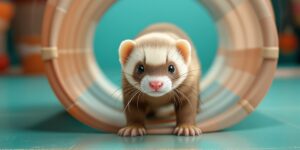
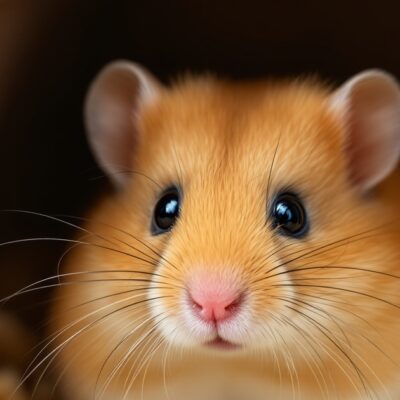
Featured image: AI-generated guinea pig illustration, not a photograph of a particular pet or a tested enclosure.
The hiding place I would be careful not to remove
A guinea pig disappears into a shelter, and the human watching has a decision to make. Leave the little house alone, or lift it away so the animal can get used to being around people?
I would pause before choosing the second option. Reading animal-welfare guidance makes that apparently helpful gesture look quite different: the thing obstructing our view may be doing something essential for the animal.
It is easy to understand the wish behind it. You want a pet to feel comfortable, you want to know that it is well, and you may be hoping for the kind of easy companionship that drew you to keeping animals in the first place.
But visibility is not the same as confidence. An animal standing in the open because it has nowhere else to go has not necessarily become more comfortable with the person looking down at it.
That distinction is the beginning of a more useful question. Instead of asking how to persuade a guinea pig to stop hiding, I would first ask what opportunities its home gives it to feel safe.
The answer is not simply to leave a pet alone forever. It is to stop treating every retreat as a problem to solve through more contact.
A clear view can mean two different things
The RSPCA’s guinea pig housing guidance explains that these animals feel vulnerable in unprotected open spaces and like staying in contact with solid surfaces. It recommends both a large exercise area and secure shelter where they can rest.
From a person’s perspective, an open enclosure can look generous and uncluttered. From a small animal’s perspective, the same arrangement can leave a journey across the floor without much protection.
This does not mean that space is unimportant. Quite the opposite: guinea pigs need room to move, stretch out and exercise, rather than being confined to a small sleeping compartment.
The question is what that space contains. The veterinary charity PDSA recommends tunnels, shelters and hides throughout the exercise area so guinea pigs can explore, move around confidently and hide when they choose.
I find that combination more helpful than the familiar choice between hiding and joining in. A place to retreat is not necessarily the opposite of an interesting life; it can be part of the conditions that make exploration possible.
Neither charity promises that a new shelter will turn a nervous pet into an outgoing one overnight. These are recommendations for meeting an animal’s needs, not a guaranteed shortcut to a particular personality.
The small detail that changes the count
One recommendation in the RSPCA guidance is especially easy to overlook. Refuge areas should exceed the number of guinea pigs by one.
That means the practical question is not only whether an enclosure contains a hide. It is whether the animals have enough refuge options, rather than having every retreat depend on access to the same single spot.
Guinea pigs also need suitable guinea pig company. Providing shelters does not replace that social need, just as being social does not remove the need for somewhere to withdraw.
For an owner reviewing an existing setup, the first step need not be a dramatic shopping trip. Look at the whole usable area and consider where an animal can go when something startles it, including away from the sleeping section.
The RSPCA lists cardboard boxes and tubes among possible shelters. Whatever you choose needs to be safe for the animals using it, appropriately sized, kept clean and replaced when damaged or soiled.
There is another part of the picture that a new accessory cannot fix: the surroundings. The charity recommends quiet, calm areas away from animals such as dogs and cats that guinea pigs may perceive as threats.
A beautifully furnished enclosure beside repeated frightening activity can still be a difficult place to live. Care involves noticing the route people take through a room, not only the products placed inside a pet’s home.
Being approachable starts before the touch
The same change in perspective applies when a person reaches toward a guinea pig. The RSPCA notes that many natural predators are birds, which helps explain why an approach from above can be alarming.
Its guidance is to approach from the front at a low level instead. When handling is necessary, the animal needs gentle, secure support, including support beneath the hindquarters, rather than being grabbed or left dangling.
I would not turn that advice into a challenge to see how quickly an animal can be made to tolerate touch. A calm approach is a way to reduce avoidable alarm, not permission to keep pushing when the animal wants distance.
Nor would I use the shelter as something to confiscate until a pet becomes friendlier. The RSPCA specifically warns that repeated fright combined with an inability to hide can cause stress.
There is room here for ordinary, patient companionship: predictable care, a quieter presence and attention to the animal rather than a schedule for achieving cuddles. Being available and being insistent are different things.
Essential care still matters. A guinea pig that seems unwell needs veterinary attention; a shelter should never become an excuse to ignore a change in eating, activity or other behavior.
The aim is not to interpret every hidden moment as contentment. It is to preserve a normal option while continuing to check the animal’s welfare carefully.
A better measure of a good home
The practical payoff is modest, which is part of what makes it useful. You can review refuge areas, keep exercise space accessible, reduce frightening disturbances and change how you approach without demanding that your pet perform a transformation.
PDSA points out that guinea pigs take naps through the day and night and need to choose when to rest and when to be active. A home arranged solely around the owner’s visiting time misses that everyday rhythm.
Cleanliness belongs in this picture too. Wet or dirty bedding needs attention, shelters need cleaning, and a safe home must remain safe after the photograph has been taken and the fresh hay has settled.
What stays with me is not a promise that a guinea pig will come running once everything is arranged correctly. It is the possibility of becoming a more observant keeper even when the animal does nothing especially rewarding for an audience.
Some of the best care is easy to miss from across the room. It may look like an ordinary shelter left in place, a person lowering their hand, or an owner noticing that a spacious floor still needs cover.
A good home is not one where we can always see its smallest resident. It is one where that resident has room to move, somewhere to retreat, and a person who understands why both matter.