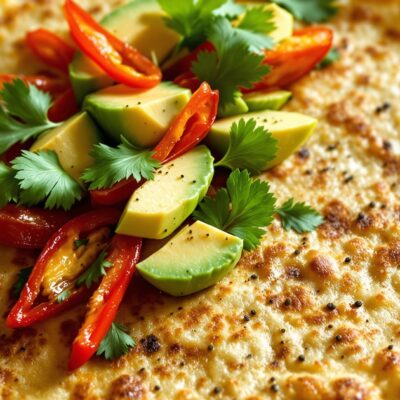


Featured image: AI-generated food illustration, not a photograph of a tested recipe or a particular kitchen in Nice.
The pancake that makes the cupboard look different
What would you make for someone who cannot eat eggs or dairy if pancakes were the only thing you felt confident cooking? It sounds like a request that takes your reliable recipe apart before you have even reached for a bowl.
Socca offers another starting point. This savory chickpea pancake, associated with Nice in southern France, does not begin with the ingredients many of us picture when we hear the word pancake.
The traditional version described by SBS Food uses chickpea flour, water, salt and olive oil, with cracked pepper to finish. There is no egg to replace and no milk to imitate; the dish already has its own way of working.
That distinction feels useful well beyond one lunch. Sometimes cooking for someone else becomes a search for what must be removed, when a more welcoming question is what you could make that belongs on the table in its own right.
There is a catch, though, if you immediately imagine recreating a crisp piece of southern French street food in your usual frying pan. The traditional cooking method and an everyday stovetop lunch are not quite the same thing, and understanding that difference makes the recipe less intimidating.
A familiar name does not mean a familiar method
In Steeve Bernardo’s recipe for SBS Food, socca is described as a traditional unleavened pancake from Nice, with related versions along that stretch of coast. The batter rests before going into a large, oiled pizza tray.
Then comes the detail that changes expectations: the recipe specifies a wood-fired oven at 500°C, or a kitchen oven at 270°C conventional or 250°C fan-forced. That is a very different environment from gently warming a breakfast pancake.
The high heat is part of the story of the finished surface. Bernardo’s instructions call for cooking until nicely charred, then cutting the socca into pieces and serving it with cracked pepper.
For a home cook, that need not become an equipment challenge. You do not have to buy a special oven or pretend a frying pan produces an identical result to learn something from the dish.
Pippa Kendrick’s BBC Food recipe takes an explicitly different route: two stovetop pancakes, with onion and sundried tomatoes in the batter and vegetables on top. Baking powder appears in this version, so it is an adaptation rather than the traditional unleavened preparation.
Keeping those distinctions visible is a small form of respect. A recipe can travel into a practical home lunch without requiring us to erase where it came from or insist every variation is the original.
What you need for a lunch for two
The following home version follows Kendrick’s ingredient quantities and stovetop method, with the instructions restated here. It serves two and gives you a way to try chickpea-flour pancakes without working with an extremely hot oven.
For the batter and its cooked filling, gather:
- 75 g gram flour, also called chickpea flour
- 185 ml water
- ¼ teaspoon gluten-free baking powder
- ¼ teaspoon smoked paprika
- ¼ teaspoon dried thyme
- ¼ teaspoon sea salt
- 2 teaspoons olive oil
- 1 small red onion, finely diced
- 6 sundried tomatoes, finely diced
For the topping, you will need:
- 1 ripe avocado, sliced
- 1 jar roasted red peppers, labelled 460 g before draining; drain and slice the peppers
- 1 small bunch fresh coriander, finely chopped
- Freshly ground black pepper, to taste
Use a non-stick frying pan about 20–25 cm across. A spatula that can slide comfortably beneath the pancake will make turning it less awkward than trying to lift it with a small spoon.
Read ingredient labels if you are cooking for a dietary requirement. Chickpea flour itself contains no gluten, but someone with coeliac disease needs ingredients and preparation protected from gluten contamination; a dish being plant-based also does not make it suitable for every allergy.
The useful thing about setting out the topping first is not that it looks organized. Once the pancakes are ready, they are meant to be served immediately, so you will not have to choose between eating them hot and finding the avocado.
The part to watch is the edge, not just the clock
Start by whisking the flour, baking powder, paprika, thyme and salt with the water until combined. This is a pourable batter, not a dough to knead, and there is no yeast-rising stage in this version.
Warm the olive oil in the frying pan over medium heat, then cook the onion over low heat for four to five minutes, until softened. Stir in the sundried tomatoes and cook for another two minutes.
Take the onion and tomato mixture out of the pan and let it cool slightly before stirring it into the batter. That brief pause also gives you a moment to check that the toppings and serving plates are ready.
Turn the heat up a little, then ladle half the batter into the pan. Kendrick’s guide is about six minutes on each side, until golden and slightly crisp; repeat with the remaining batter.
The visual and physical cues matter alongside those timings. Before you flip, the edge should lift away from the pan and the pancake should be firm enough to turn without breaking, rather than still looking like loose batter.
If the first side is coloring very quickly while the top remains unsettled, ease the heat down. Pans and burners differ, so the aim is a cooked pancake with some crispness, not winning a race against the printed minutes.
Move each cooked pancake to a plate and add avocado, drained peppers and coriander. Finish with black pepper and serve straight away, remembering that the second pancake also needs its cooking time.
A meal does not need to be an audition
This version gives you a golden pancake carrying vegetables, not a claim that your kitchen has become a street-food stall in Nice. That is enough: the connection to the original dish can invite curiosity without turning lunch into a performance.
You might later try Bernardo’s oven method, following its separate quantities, resting time and equipment guidance. Or you might simply keep chickpea flour in the cupboard because this is a lunch you would like to make again.
Neither choice needs a dramatic story attached to it. There is value in learning one workable thing, understanding whose recipe helped you, and making room at the table for someone whose needs differ from yours.
Cooking does not remove the difficulty of food allergies, limited budgets or exhausting days. But a clear recipe can remove one small uncertainty: what to offer when your usual answer does not fit.
What is the dish you make that feels generous without requiring you to impress anyone? Sometimes the most useful recipe is the one that lets you stop apologizing for a simple meal and start enjoying it together.