



The bowl that makes a small demand
A saucepan of milk can seem like the beginning of something that barely needs your attention. Then a small measure of semolina enters the picture, and suddenly the important question is not what else to add, but when to stop.
That is what caught my attention while reading two German semolina pudding recipes. Both promise an uncomplicated dessert, yet their instructions make room for a step that can feel surprisingly difficult when you want to be certain dinner has worked: taking the pan off the heat before the bowl looks finished.
The dish is Grießbrei, a gently sweetened semolina pudding that can be served warm or chilled. It does not require an oven, a pastry crust or a shopping bag full of ingredients, and the basic version does not need an egg.
There is an understandable temptation to keep stirring and cooking until a pudding holds exactly the shape you want. But a mixture that looks perfect in a hot saucepan may not feel the same by the time you sit down.
This is not a story about a secret ingredient or a supposedly forgotten cure for a difficult day. It is a small cooking lesson with a useful reward: a warm dessert that asks for care without asking you to make an occasion of it.
Two recipes, and a difference worth keeping
On Our Gabled Home, Anja Eckert describes Grießbrei as a familiar childhood dessert that sometimes appeared as a light lunch. That memory belongs to her; it is not a claim about every German household, and it does not need to become one to give the recipe meaning.
Her version combines milk, fine semolina, sugar, vanilla, a little butter and salt. After a few minutes of gentle cooking, the pan is covered and left briefly off the heat, allowing the pudding to thicken further.
Angela Schofield’s recipe at All Tastes German begins with the same modest foundations but takes a richer route. She separates an egg, incorporates the yolk and folds in beaten egg white, alongside butter and vanilla.
These are not interchangeable instructions for one identical result. The egg-enriched version includes extra preparation and a different finishing method, while Eckert’s egg-free version keeps the process straightforward.
For the recipe below, I would choose the simpler route rather than combine the two and pretend the results were already tested. The quantities and basic method follow Eckert’s recipe, with optional fruit for serving; this is a sourced adaptation, not a claim of a home kitchen trial.
Even before the milk heats, one purchase matters. Eckert specifies fine wheat semolina, identified as Weichweizengrieß, rather than inviting cooks to substitute any granular ingredient that happens to look similar.
Check the product carefully, especially if the shop offers several grades. This pudding contains wheat and is not gluten-free; the version below also contains dairy, so it should not be offered as suitable for those allergies.
A short ingredient list still needs a clear method
For four small dessert portions, gather the following ingredients. A small serving is intentional here: the amount below makes a modest pudding, not four large bowls of breakfast.
- 2 US cups whole milk, plus a small extra splash if needed
- ¼ US cup fine wheat semolina
- 2 tablespoons sugar
- 1 teaspoon vanilla extract
- 1 teaspoon butter
- 1 pinch salt
- Optional: 4 tablespoons ready-to-eat fruit compote, divided between the bowls
Measure everything before turning on the stove. The semolina goes in gradually, and having it ready in a small bowl makes that easier than trying to measure it over a hot pan.
- Put the milk, sugar, vanilla, butter and salt in a medium saucepan. Warm over low-medium heat until the mixture reaches a gentle boil, watching so it does not boil over.
- Slowly sprinkle in the semolina while whisking continuously. Do not tip the entire measure into one spot; a steady addition gives you a better chance of keeping the mixture smooth.
- Lower the heat and simmer gently for about 3–5 minutes, stirring frequently, until the mixture thickens. Keep the heat restrained rather than trying to rush it with a vigorous boil.
- Turn off the heat, cover the pan and let it stand for a minute or two. This pause is part of the recipe, not spare time before serving.
- Uncover and stir. If you prefer a looser pudding, stir in a little extra milk, then divide between four small bowls and add the optional compote.
The source’s cooking time is a guide, not a reason to ignore the pan. Different products and stove settings can behave differently, so read the semolina packet as well and pay attention to the texture.
For a first attempt, keep the toppings simple. One spoonful of fruit per bowl gives you something bright alongside the mild pudding without turning a short recipe into a second cooking project.
The change continues after the heat stops
The most useful instruction in Eckert’s recipe may be her warning that the pudding thickens as it cools. It explains why cooking until it looks very firm can leave you with something heavier than you wanted.
I like the distinction between stopping the heat and stopping the process. Those are not quite the same moment here, and remembering that gives the brief covered rest a purpose.
It also changes how you judge the result. Instead of demanding the final serving texture from the bubbling pan, you allow the recipe’s resting stage to happen before deciding whether anything needs adjusting.
If the pudding becomes thicker than you like, Eckert recommends adding more milk. For leftovers, she suggests a splash of milk and gentle reheating, stirring to bring back a creamier texture.
Her guidance allows refrigerated leftovers for up to three days and advises against freezing because the texture may become grainy. Refrigerate leftovers promptly rather than leaving a dairy pudding sitting out; serve it chilled or reheat only what you need.
None of this requires pretending that a plain bowl will look like a restaurant dessert. A slightly softer consistency, a little fruit and a spoon can be enough, provided the food is something the person eating it actually enjoys.
Comfort does not need a borrowed childhood
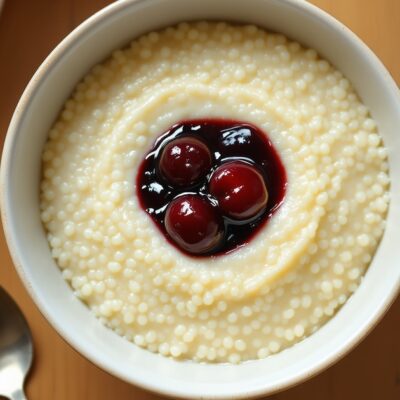
Schofield suggests cinnamon sugar, applesauce or fruit compote, and notes that the pudding can be eaten warm or chilled. Eckert offers cherries, jam and other toppings, too; the shared idea is flexibility around a recognizable base.
You do not need to inherit somebody else’s family memory to try it. Reading a cook’s account can provide cultural context without requiring you to claim the dish has always belonged in your own kitchen.
What I take from these recipes is something less dramatic and more useful: an ordinary dessert can become approachable when the instructions explain what will happen after the obvious work is over. The small pause is not uncertainty; it is part of making the bowl you wanted.
If someone you care about likes a warm, mild pudding, ask which topping they would choose. Making room for that preference is a practical kind of attention, and a simple recipe leaves room for it.
Then serve the bowls while they are pleasantly warm, not scalding. There is no need to turn the evening into a lesson about gratitude or resilience when a well-made little dessert can simply be dessert.
Image: AI-generated food illustration, not a photograph of either recipe author’s cooking.