




The detail that made me read more slowly
I started reading about a parrot experiment expecting a clever trick. There were metal rings, food rewards, and birds that had learned how to exchange one for the other.
That alone would make an appealing demonstration of learning. But the detail that held my attention was a blocked opening, and a bird on the other side of a divider.
One parrot had the tokens but could not trade them for food. Its neighbor could make the exchange but had no tokens to offer.
It is an arrangement that looks almost frustratingly simple on paper. Each bird had something the other lacked, but only one could get a treat under the conditions of the test.
The research, published in Current Biology in 2020, asked whether a parrot would do something useful for another bird without getting an immediate reward itself. Not whether it could repeat a sound, solve a puzzle, or impress a person watching.
I found that shift in the question unexpectedly moving. We so often describe animal intelligence through what an animal can get for itself that it is easy to overlook what it might make possible for somebody else.
Two birds, with different pieces of the problem
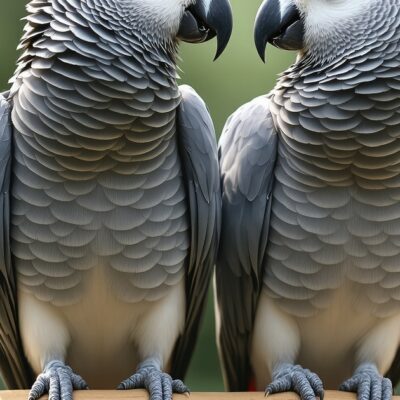
The Max Planck Society’s account of the research describes work at its comparative cognition research station in collaboration with the Loro Parque Foundation in Tenerife. The African grey parrots had already learned to exchange metal tokens with an experimenter for food.
That training mattered. A token was not simply an unfamiliar object being dropped into an enclosure; it had an established use in the birds’ experience.
For the helping test, two birds occupied adjacent compartments. An opening between them allowed a token to pass from one side to the other.
The bird holding the tokens had its own exchange opening blocked. Its neighbor’s opening remained available, creating a situation in which passing a ring could help the neighbor obtain a piece of nut.
The institution illustrates the setup with two parrots, Bella and Kimmi. In its account, Bella passes tokens through the divider, and Kimmi exchanges them for treats.
I do not need to imagine a private conversation between those birds to find that interesting. The documented action is enough: an object moved to the place where it could become useful to another animal.
Still, an appealing description is not the same thing as an explanation. A bird might move a ring because it likes moving objects, because a neighbor is nearby, or because an opening attracts its attention.
Those alternatives are exactly why the next part of the experiment matters. Without comparisons, a charming moment could carry far more meaning than the evidence could support.
The researchers changed what the neighbor could do
According to the researchers’ published questions and answers about the study, they tested what happened when the neighboring compartment was empty. They also tested what happened when the neighbor was present but its exchange opening was blocked.
In the second situation, a token could still be passed across. It just could not be turned into food by the recipient.
Those comparisons separate two different possibilities. Was the parrot simply transferring something, or was it more likely to transfer something when that action could help another bird complete a task?
The African greys transferred significantly fewer tokens in both control conditions. Their behavior changed when there was no recipient, and when the recipient could not use the rings to obtain food.
That pattern supports the researchers’ interpretation of instrumental helping: assistance that enables another individual to achieve a goal. It is a more specific claim than saying the birds were universally generous or knew exactly how their neighbors felt.
The first attempts were revealing, too. Seven of the eight African grey parrots passed at least one token in their first trial as the bird with tokens.
At that point, they had not yet experienced taking turns in the two roles. Their initial helping therefore did not depend on first learning, within this experiment, that the recipient would later be able to return the favor.
I keep coming back to that distinction. An immediate personal payoff was absent, yet most of these birds still performed the action that made a payoff possible for the neighbor.
A finding worth keeping within its boundaries
The study does not let us read a parrot’s mind. In their own FAQ, the researchers identify empathy and the mechanisms behind the helping behavior as questions for further investigation.
There is also a difference between observing this result in a small group of African greys and declaring it a rule for all parrots. The other species tested, blue-headed macaws, did not show the same helping pattern in this task.
That comparison is not a moral ranking of birds. It points toward further questions about social relationships, tolerance around food, and how different species respond to a particular experimental setup.
The researchers reported that relationship quality mattered among the African greys. Birds transferred more tokens to closer companions, although helping was not restricted to their closest partners.
They also asked whether comparable behavior could be observed in the wild under more natural conditions. A laboratory token exchange is useful precisely because it separates parts of a problem, but that clarity comes with limits.
For me, those qualifications do not spoil the story. They make it more trustworthy than a sweeping claim that parrots have discovered human kindness or that one experiment settles the origins of cooperation.
What remains is already substantial: these birds responded differently depending on whether another bird could benefit. Their social behavior deserved the same careful attention as their more familiar problem-solving abilities.
What stayed with me after the metal rings
I would not turn this experiment into a lesson about giving away everything you have. The helping bird could not exchange its own tokens in that condition, and the study was not a test of unlimited sacrifice.
Nor does an African grey’s behavior offer a simple explanation for human friendship. Our relationships carry histories, obligations, and pressures that a token-transfer task does not reproduce.
What I take from it is something smaller: usefulness depends on circumstances. The same ring that could do nothing through one blocked opening could become food on the other side of a divider.
The researchers did more than notice an attractive action. They changed the circumstances and watched whether the birds changed their behavior, too.
That is the part I find most satisfying. The emotional appeal survives closer inspection, while the explanation becomes more careful rather than more extravagant.
I began with a familiar question about a clever animal: what can it learn to do? I finished with a different one: what does it notice about what another animal needs?
There is still plenty the experiment cannot answer. But a few metal rings, and the decision to move them across a divider, made that second question much harder to ignore.