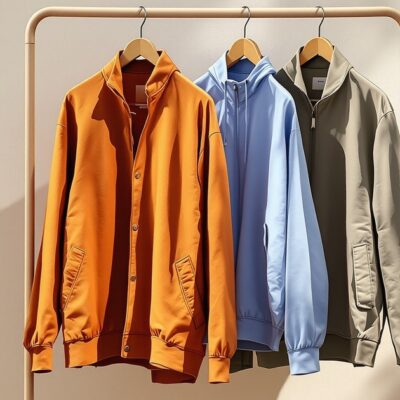





Illustration: AI-generated clothing display, not a photograph of a Street Store event or its shoppers.
A clothing donation with a different destination
A clothing store can have no permanent premises, charge nothing, and still take the shopping experience seriously. That is the surprising starting point of The Street Store, an initiative that began in Cape Town in 2014.
The clothes are donated, but the people receiving them are not simply handed whatever someone else has selected. They browse, consider what fits, and look for something they actually want to wear.
It is a small distinction until you think about your own wardrobe. You can appreciate a generous gift and still know that the sleeves are wrong, the fabric feels uncomfortable, or the color makes you feel unlike yourself.
Needing help does not remove those preferences. Yet the practical pressure to distribute donated goods can make the person doing the choosing almost disappear from the process.
The Street Store offers a concrete way to think about that problem. Its story is not about a miraculous garment that changes a life overnight, but about what happens when an ordinary decision is left with the person who will live with it.
There is a familiar question underneath the racks of clothing: when we offer someone help, how much room do we leave for their answer?
The bag is not the end of the journey
For a donor, clearing out a wardrobe can feel like the finished job. A jacket no longer worn is placed in a bag, the bag leaves the house, and something useful has been passed along instead of thrown away.
But that is only one side of the exchange. On the other side is someone trying to find clothing that works for their body, their circumstances, and their sense of themselves.
In its March 2025 reporting on The Street Store, CapeTownMagazine described people browsing garments on hangers rather than rummaging through bins. The article emphasized that shoppers could leave with items they wanted and liked, not merely items that happened to be available.
That reporting concerned a particular Cape Town campaign, including an April 2025 pop-up. Those dates are historical, not an invitation to attend an upcoming event or use an old donation deadline.
The underlying model, however, remains visible on The Street Store’s current website. It describes volunteer-supported pop-up stores, invites people to host events, and places choice alongside the practical work of collecting and redistributing clothing.
This is not a conventional retailer with a permanent shopfront. Nor is it a reason to assume every local event operates on the same timetable or accepts every item.
It is a different arrangement of a familiar act of generosity. The donation starts the process, but it does not get to make every decision that follows.
What an ordinary preference can tell us
Think about the last time you chose between two otherwise useful pieces of clothing. Perhaps one moved more comfortably, had pockets in the right place, or simply felt more like something you would wear.
Those are not necessarily extravagant demands. They are part of making an object useful in a real person’s day, rather than useful only on a donation checklist.
In the CapeTownMagazine interview, Mike Abel explained that the store format allows people to choose clothing they like, want, need, and can wear in their size. The important contrast was with settling for whatever arrived in a bag.
There is no need to invent a dramatic shopper’s reaction to see why that distinction matters. A garment is not fully useful just because it has left the donor’s cupboard.
The 2025 campaign also asked for clothes that were clean, recently washed, and in good condition, without holes or stains. Those requirements make the idea less sentimental and more demanding: the quality of what is offered matters before anybody starts browsing.
For someone considering a donation now, the sensible next step is to check the current organizer’s requirements. An old collection notice is not a universal policy, and local needs, accepted items, and available storage can differ.
Good intentions do not eliminate that practical work. Sorting, checking condition, and finding out what is wanted are ways of respecting the people who will receive the clothes and the volunteers who will handle them.
There is something reassuring about that. You do not need to make a grand claim about changing the world to do a donation properly; you need to pay attention to where it is going.
The surprising thing the store does not take away
The revealing feature of The Street Store is not simply that the price disappears. It is that the shopper does not disappear along with it.
The organization’s current website presents its model as open source, so people in different places can organize local versions. Its emphasis is on a dignified shopping experience rather than a single building that everyone must travel to.
That framing does not mean a pop-up clothing event can solve homelessness. Housing, income, safety, health, and access to services remain larger needs, and an article about donated clothes should not pretend otherwise.
Nor can a display of garments guarantee that every shopper will find the right size. Donations are finite, local conditions vary, and there are real limits to what any event can provide.
Still, a limited form of help can be offered thoughtfully. The choice between several garments is not a solution to every problem, but it can remain a choice that belongs to the person receiving support.
That is the useful human lesson here, rather than a claim about measured outcomes. Care can meet a practical need without treating preference as something people must surrender before they qualify.
A better question before giving
If this story makes you look at an unworn jacket differently, there is a manageable place to begin. Check its condition, find a current collection or organization, and read what that group is actually asking for.
Use The Street Store’s present website to explore hosting or donating, rather than assuming a location from an older article is still collecting. If another local organization is easier to reach, the same care in checking its needs still applies.
The principle can travel beyond clothing without turning every kind gesture into a project. Before choosing for someone, ask which option would be useful, whether a particular offer fits their circumstances, and whether they would prefer something else.
Sometimes the answer will be inconvenient. The thing we are eager to give may not be the thing another person needs, and accepting that answer is part of taking them seriously.
The Street Store makes that idea visible through a familiar activity: shopping. Not luxurious shopping, not unlimited shopping, but the ordinary act of looking at what is available and deciding what belongs with you.
A donation can begin with letting go of something in your wardrobe. The more thoughtful part may be letting go of the assumption that you should choose what happens next.