



The rescue was not the end of the story
When an injured ant makes it back to the nest, it is tempting to think the dangerous part is over. Someone has noticed, someone has helped, and the small creature is no longer alone outside.
But for African Matabele ants, getting home leaves another problem waiting. A wound can admit bacteria, and being safely inside the nest does not automatically stop an infection.
That is what makes a study published in December 2023 so compelling. Researchers were not simply asking whether ants help injured nestmates; earlier work had already documented that behavior.
They wanted to understand what happened during the care itself. Was it ordinary cleaning, or could the response change according to what was happening inside the wound?
The distinction might sound small until you picture the difference between offering everyone the same help and noticing that one individual’s needs have changed. In this case, the evidence came from observations, bacterial measurements, and a series of carefully controlled comparisons.
There is no need to imagine a tiny hospital or give the ants human thoughts. Their actual behavior offers enough to hold our attention, beginning with a question: what can care accomplish when it responds to more than the obvious injury?
A dangerous meal and an invisible second threat
Matabele ants, scientifically known as Megaponera analis, live in sub-Saharan Africa and specialize in hunting termites. The termites are not defenseless food; their soldiers can inflict injuries with powerful jaws.
Researchers had previously observed injured ants being carried home, where nestmates groomed and licked their wounds. The new investigation examined how that attention could prevent a seemingly survivable injury from becoming fatal.
In the original Nature Communications paper, Erik Frank and colleagues describe work conducted through the Comoé National Park research station in Côte d’Ivoire. The experiments involved controlled injuries, so this was not simply a collection of naturally occurring rescue scenes.
That difficult detail belongs in the story. Researchers compared wounded workers exposed to pathogens with wounded workers receiving a sterile solution, then examined bacterial growth and survival under different conditions.
One bacterium emerged as particularly important: Pseudomonas aeruginosa. It could cause lethal infections in the injured ants, allowing the team to use a known pathogen concentration in subsequent tests.
Now the question became more precise. If nestmates really altered the course of an infection, the effect should show up in something more measurable than how long they stood beside an injured worker.
The researchers could look at the bacteria. They could compare survival, and they could investigate whether preventing access to a particular secretion changed the outcome.
The treatment was not identical for every wound
Filming injured ants after their return to nestmates revealed a sequence of actions. A caring worker cleaned the wound with its mouthparts and, in some interactions, added material from a gland on the body.
This was the metapleural gland, located toward the rear of the thorax. Workers could collect its secretions from themselves or from the injured ant, then use them during wound care.
Crucially, applying these secretions was not simply an automatic part of every interaction. The researchers recorded it in 43 of 411 wound-care interactions, and the pattern differed between infected and sterile wounds.
Between ten and twelve hours after infection, gland secretions were applied significantly more often to infected wounds. That timing made the behavior more interesting than a general habit of cleaning anything that looked damaged.
How could the ants distinguish the situations? Chemical analyses found differences in the hydrocarbons on the body surface as infection developed, suggesting a possible source of information for nestmates.
The cautious wording matters here. The study links infection, changing chemical profiles, and targeted treatment; it does not give us direct access to an ant’s understanding of disease.
Nor does the word care prove that the ants experience compassion in the human sense. It describes an observed behavior with consequences for another individual’s survival, which is already remarkable without an invented emotional explanation.
The University of Würzburg’s account of the research highlights that combination: recognizing a difference in wound condition and applying antimicrobial substances. The intriguing part is not merely that help happens, but that the help is not entirely indiscriminate.
What changed when nestmates could help
One comparison makes the stakes unusually clear. Among wounded ants exposed to a controlled concentration of P. aeruginosa, mortality within 36 hours was 93 percent in isolation and 8 percent among those returned to nestmates.
Those figures describe that particular experiment, not a promise that every injured ant will survive. Other experimental conditions produced different results, which is why the individual comparisons should not be mixed together.
In another test, researchers blocked access to the metapleural glands. Infected ants then had worse survival than those whose nestmates could still use the secretions, supporting the importance of the material rather than proximity alone.
The team also tested gland extracts against the bacterium and found that they inhibited its growth. Chemical and protein analyses revealed a complex mixture, including substances with potential antimicrobial or wound-healing roles.
This is where an appealing nature story becomes a more substantial discovery. The observations were supported by changes in infection and survival, not only by a video that looked touching.
There is potential interest for future medicine, but potential is not a finished treatment. These findings do not establish a safe human antibiotic, and they are certainly not instructions to apply insects or their secretions to a wound.
A reason to notice the follow-up
What stays with this story is the attention after the dramatic moment. Bringing an injured nestmate home matters, but the research shows why the next hours can matter too.
That does not make an ant colony a model for human society. Our relationships, choices, and medical needs are different, and insects cannot supply a moral rule simply by behaving as evolution has shaped them to behave.
Still, we can let a discovery prompt a useful question about our own lives. When we have helped someone through the immediate difficulty, do we assume the need has ended, or do we leave room to ask again?
For people, that might mean a specific, welcome follow-up rather than an intrusive demand for updates. Ask whether a practical offer is still useful, respect the answer, and remember that emotional support does not replace professional care.
The ants do not need to be miniature versions of us for their story to broaden our attention. A small body can contain complicated biology, and an easily overlooked interaction can change whether another creature survives.
What kind of follow-up has made you feel genuinely supported? It is a human question inspired by the research, not answered by it, and perhaps a good one to carry beyond the moment when everyone thinks the crisis is over.
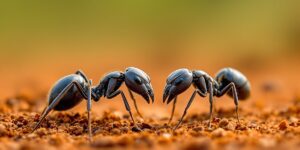
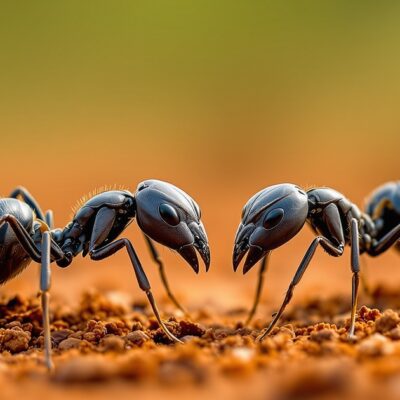
Image: AI-generated illustration, not a photograph of the research animals or a documented treatment event.