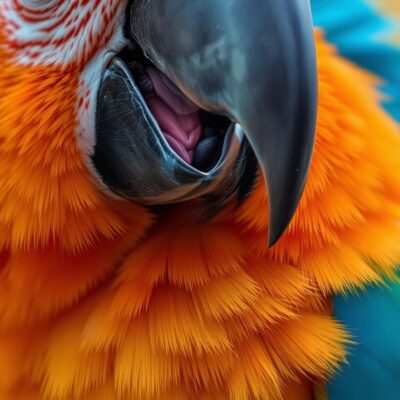




At 6:47 on a rainy Tuesday morning, while the coffee maker gurgled and the rest of the house was still dark, a woman in a faded sweatshirt bent over to tie her shoe. That was the moment her African grey parrot chose to announce his presence. He did not say good morning. He did not whistle the theme from a commercial. He leaned forward on his perch, fixed her with a pale, knowing eye, and made a sound so accurately rude that she dropped the shoelace and laughed until her ribs hurt.
Then he said it. Clear as a bell. One syllable. “Butt.”
If you have never lived with a parrot, this might sound like a trained trick, a novelty designed for clicks. But African greys are not wind-up toys. They are feathered toddlers with a vocabulary that can climb past a thousand words, a memory that holds grudges, and a sense of humor that lands somewhere between a five-year-old human and a mischievous stand-up comic. They do not merely repeat what they hear. They choose. They time. They watch your face the way a poker player watches a tell. And this particular bird had clearly decided, long ago, that the fastest route to his person’s happiness was through the lowest possible form of comedy.
He was not wrong.
In a corner of the internet usually reserved for outrage, breaking news, and carefully filtered selfies, the clip of this bird and his unapologetic obsession cut through the noise like a whoopee cushion in a library. People did not just chuckle. They leaned in. They watched it twice. They sent it to their mothers, their exes, their coworkers who were having a terrible week. Something about a woman dissolving into giggles while her parrot serenaded her backside felt like water in a desert we did not know we were walking through.
We have built our online lives around polish. Every post is a performance. Every caption is a pitch. We angle the light, mute the chaos, and present the version of ourselves that seems most acceptable. Then along comes a grey bird with a crest of white face feathers and the comedic instincts of a summer-camp prankster, and he blows the whole thing open. He is not trying to be relatable. He is not curating a brand. He simply believes, with every feather on his body, that farts are funny and butts are worth discussing.
The real magic, though, is not the bird. It is the woman behind the camera.
She does not shush him. She does not look embarrassed. When he toots on cue, her laugh arrives before she can stop it — loud, unguarded, and completely without vanity. It is the laugh of someone who has stopped performing. In that kitchen, with the coffee going cold, there is no algorithm, no audience, no need to be anything other than a person who loves a ridiculous animal. And we, watching from the other side of the screen, feel something loosen in our chests.
Kids understand this instinctively. Put a group of five-year-olds in a room and whisper the word “underwear,” and the whole place erupts. There is a developmental window where the body is both fascinating and hilarious, where breaking a social rule — even a tiny one — feels like freedom. Most of us outgrow the public phase of that humor. We learn to sit still, lower our voices, and treat bodily functions as shameful inconveniences. But the feeling itself never really leaves. It just gets locked behind a door marked “mature adult,” and we forget where we put the key.
The parrot, apparently, has been holding it this whole time.
What makes the obsession escalate is not repetition. It is connection. African greys are emotional mirrors. They notice what makes us light up, and they file that information away for future use. If a certain sound makes you double over with laughter, you can be sure it will become part of the repertoire. So when this bird escalates from a single rude word to a full symphony of raspberries, squeaks, and perfectly timed glances, he is not being random. He is being strategic. He is doing the thing that works. He has learned, perhaps better than any of us, that joy is a language best spoken without dignity.
That is why the comments under the video turned into something warmer than the internet often allows. People did not argue. They did not one-up each other with cynicism. They told stories. They wrote about the parrot who wolf-whistled at the mail carrier. The cat who hid in a grocery bag and pounced at ankles. The dog who sighed like a disappointed father every time the Wi-Fi went out. One after another, they offered up the small, strange habits of the animals they loved, as if the bird had given them permission to admit that their own homes were also full of nonsense.
Because they are. Every household has its own private absurdity. The thing you only notice when the world slows down long enough for you to hear it.
The deeper pull of the video is this: the woman is not laughing at a parrot. She is laughing with him. There is a difference. To laugh at something is to stand apart from it. To laugh with something is to meet it in the same room. She has met him there. She has decided that dignity is overrated, that a Tuesday morning can be improved by a rude noise, and that love sometimes sounds like a whoopee cushion.
That is the real reason millions of us pressed share. We recognized the relief of being known by someone who does not require us to be impressive. We remembered, for thirty seconds, that the people and animals who love us usually love the unpolished version best.
Joy is not always found in milestones. It does not always arrive as a promotion, a vacation, or a perfectly staged sunset. More often, it hides in the stupid, sacred moments we almost miss. The parrot on the shoulder. The unexpected fart noise. The look that says, “I know exactly what I’m doing, and I’m doing it for you.”
So tonight, when the news is too much and the to-do list is too long, maybe try the bird’s approach. Lower the stakes. Make the ridiculous sound. Let someone catch you being fully, foolishly human. The people who can still do that — who can still dissolve into laughter over something a child would find hilarious — share one quiet superpower. They have not let the world convince them that wonder is only allowed in fancy packaging.
They know that sometimes the best thing you can be is the person who laughs at a parrot saying “butt.”
And honestly, do you remember the last time something that silly made you laugh until you couldn’t breathe? Tell us in the comments: what’s the most ridiculous thing your pet — or someone you love — does that always makes you smile?