


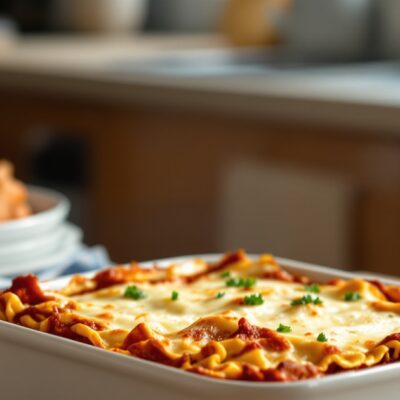


Featured image: AI-generated illustration of a homemade lasagna, not a photograph of a Lasagna Love delivery or volunteer.
The part of dinner that happens before anyone eats
A tray of lasagna is an easy thing to picture. What interests me about Lasagna Love is something less visible: the moment when a person decides whether their difficult week is a good enough reason to accept one.
Perhaps you know the hesitation. You could use help, but somebody else must need it more, and explaining everything might take energy you do not have.
That is a familiar situation to imagine, not the story of an unnamed recipient. It is also the question that makes this particular volunteer project worth reading about beyond its appealing photographs of dinner.
Lasagna Love began in San Diego during the early months of the pandemic, when Rhiannon Menn started making meals for other families. In accounts published by the Associated Press in 2021 and MIT Technology Review in 2024, seven early meals became a way for neighbors to help neighbors.
I am not drawn to the story because a baked dinner can solve everything. It cannot repair a lost income, replace medical care, or remove the long work of caregiving.
The more useful question is smaller: what changes when help arrives without requiring someone to make a convincing case for deserving it? The history of this project offers a practical answer, and a complication worth keeping beside it.
A kitchen offer became a different kind of invitation
According to Julie Fox’s 2024 profile in MIT Technology Review, Menn and her young daughter made lasagnas and offered them through local mothers’ groups. Other people soon wanted to cook, and Menn began connecting willing volunteers with families requesting meals.
The invitation did not depend on one narrow definition of hardship. Health problems, food insecurity, and other pressures could all sit behind a request.
That distinction matters to me because need is often difficult to read from outside a household. A person may still be going to work, answering messages, and looking organized while having very little energy left for the evening.
It would be easy to turn that observation into a claim about every recipient. The reporting does not justify that, and it does not need to: the actual model leaves room for different circumstances instead of requiring everyone to share the same story.
The 2024 profile described a request form collecting practical information, including contact details, an address, and dietary restrictions. Explanations of why someone needed help could be optional.
I find that separation important. A cook needs information that makes a meal useful and safe; that is different from demanding a private account of someone’s hardest days.
There is a lesson here for smaller offers between people who already know each other. Before asking for the whole story, we can ask what would actually help, what would not, and whether the person wants the offer at all.
The generous idea still needed an ordinary system
A good intention does not tell you which volunteer lives close enough to make a delivery. It does not resolve dietary needs, decide a convenient time, or make a family available when the cook happens to be free.
The MIT Technology Review profile describes how Menn initially used a spreadsheet and maps to connect people. As the project expanded, students from MIT’s Leaders for Global Operations program helped develop an algorithm for matching.
This is the less photogenic part of the story, but I would not want to leave it out. The work between offering a meal and getting it to the right door is part of the care, not an administrative distraction from it.
Volunteers described in the profile could choose different levels of commitment. Some could make several lasagnas in a week, while others had the time and budget for one in a month.
They also had access to food-safety information and training materials. That detail keeps the story grounded: feeding someone responsibly involves more than knowing how to make a dish you enjoy.
There were limits, too. In Haleluya Hadero’s 2021 Associated Press report, some communities had more meal requests than available cooks, while volunteers elsewhere had fewer requests nearby.
The report followed volunteer Lynn Hirsch taking meals to Georgia communities where people had been waiting because local cooks were scarce. Her effort did not erase the mismatch; it showed why generosity still needs coordination, travel, money, and time.
That is why I would not read a welcoming invitation as a promise of immediate delivery. A model can be compassionate and still depend on the people and resources available in a particular place.
The meal was specific, but the meaning was personal
The AP report included Jan Delucien, who had experienced a traumatic brain injury and was relying on other food assistance. She described receiving a lasagna as making her feel remembered.
That is her reported experience, not proof that every delivery produces the same feeling. Still, it puts something concrete beside the larger language of kindness: a person received food she enjoyed, and the effort felt personal to her.
I would be careful not to turn that response into another obligation for the recipient. Nobody should have to cry, explain their gratitude, pose for a photograph, or provide an uplifting ending to justify accepting dinner.
The more durable lesson is in how an offer is shaped. A manageable meal, a clear arrangement, and respect for privacy can make support easier to receive than an open-ended invitation to ask for anything.
This is not a recipe article, and there is no single special lasagna that makes the idea work. The reporting describes different volunteer recipes and accommodations; the point is to coordinate something the household can actually use.
Lasagna Love’s official request page outlines checking local availability, requesting a meal, getting matched, and arranging delivery. Check the organization’s current guidance directly rather than treating the older reporting here as a guarantee of service, timing, or dietary accommodation.
A smaller offer can leave more room for dignity
If I were borrowing one idea from this story, it would not be to promise more than I could sustain. It would be to make one honest offer more specific and less demanding.
Instead of asking someone to organize my helpfulness, I could offer a particular meal on a particular day, ask about allergies and preferences, and make declining easy. If food is not useful, I could accept that answer without asking them to reassure me.
Any homemade delivery also needs safe preparation, storage, and transport. A warm intention is not a substitute for checking those details, especially when someone has medical or dietary requirements.
Nor is one neighbor’s dinner a replacement for reliable food assistance or broader support. The AP reporting explicitly noted that charitable efforts alone could not meet the scale of food insecurity.
Keeping those limits does not make the smaller act meaningless. It makes the offer honest: this will not fix everything, but it can take one real task off your evening.
That is the part of Lasagna Love’s story I want to keep. The meal matters, and so does allowing someone to receive it without first turning their life into an argument for why they deserve care.