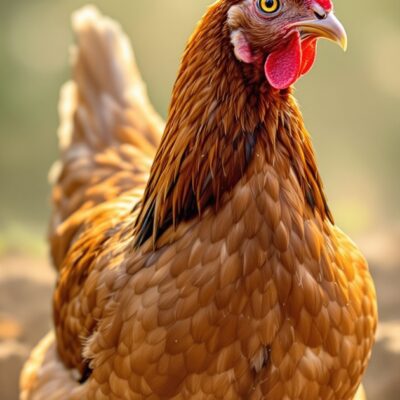



Featured image: AI-generated illustration of a hen, not a photograph of a particular rescued bird or research animal.
The garden mess that can look like trouble
A hen can throw dirt over herself as part of getting clean. That reversal is surprising enough, but there is another detail that makes the behavior worth a closer look: some hens will perform the movements even when the material they need is missing.
For someone new to chickens, the first encounter can be unsettling. A bird lowers herself into a hollow, rolls, and works loose earth through her feathers instead of behaving like the tidy animal a careful keeper might expect.
The British Hen Welfare Trust says its helpline has received calls from people who thought their dust-bathing hens were having a fit. That is a documented misunderstanding, not a reason to dismiss every unusual movement as harmless.
It does, however, reveal how easily care can begin with the wrong picture. We see dirt and think something needs cleaning; a chicken may be using that same dirt for an ordinary part of body maintenance.
The more useful question is not whether the activity looks dignified. It is what the bird is doing, what makes it possible, and what happens when a well-kept home has accidentally left that possibility out.
Feather care does not follow our bathroom rules
In its guide to common backyard chicken behaviors, the Alabama Cooperative Extension System groups dust bathing with preening, stretching, and other comfort behaviors. Here, comfort means activities involved in caring for the body, not a human judgment about a luxurious afternoon.
Preening and dust bathing do different jobs within that care. During preening, a chicken runs her beak through her feathers, realigning their small structures and distributing oil from a gland near the tail.
Dust bathing helps remove dead skin and stale preen oil. The bird digs a small hollow, settles into the loose material, works it through her plumage, then stands and shakes it out.
So the apparent contradiction becomes less mysterious. The point is not to keep every speck of earth away from the feathers; it is to let the bird carry out a sequence that helps maintain them.
That does not mean any dirty surface is suitable. The British Hen Welfare Trust’s dust-bathing guide describes a preference for dry, loose soil or sand, and notes that hens often choose a favorite place.
A muddy patch and a usable dust bath are therefore not interchangeable. Nor is a freshly cleaned space automatically a complete environment simply because it looks reassuring to the person who cleaned it.
This is the first shift in the story: looking after an animal includes making room for activities that may temporarily make the surroundings look less orderly.
The movements can continue after the opportunity disappears
The most revealing part is what happens when chickens cannot perform the activity properly. Alabama Extension describes dust bathing and preening as highly motivated behaviors, and lists imitation dust bathing without suitable material among the problems that can appear when normal behavior is frustrated.
That imitation is often called sham dust bathing. The name describes a mismatch between movement and surroundings, not a bird pretending for an audience.
A second extension resource, written by University of Kentucky poultry specialist Jacquie Jacob, makes the same basic observation. Chickens can go through dust-bathing motions without access to a dust bath, and behavioral studies have found hens willing to work for access to suitable material.
These are educational summaries, not a new experiment being announced here. They do not tell us exactly what any particular hen feels, and an observer should not turn one movement into a confident diagnosis.
Still, they challenge a tempting assumption: if an animal is fed, watered, and sheltered, everything else must be an optional extra. Meeting those essentials does not erase the motivation to perform other normal activities.
There is a caution on the other side, too. Jacob’s guide specifically says that access to dust bathing does not prevent feather pecking, so adding a patch of soil is not a complete answer to every flock problem.
Understanding one need should make care more precise, not make us overconfident. A useful improvement remains one part of housing, nutrition, social management, and appropriate veterinary attention.
A better answer can start with a dry patch
For a keeper, the practical lesson is modest and concrete. Check whether the flock has access to suitable loose, dry material rather than assuming that an outdoor run automatically provides it.
Look at the place the hens actually use. If their preferred hollow becomes wet, the opportunity you thought you had supplied may no longer work in the same way.
The British Hen Welfare Trust discusses keeping a dust-bathing area covered so its material stays dry. A sheltered patch or suitable accessible container can be more useful than an elaborate arrangement chosen mainly because it looks attractive.
Observe access as well as appearance. Alabama Extension describes dust bathing as a behavior birds can perform together, so watch whether the available area is genuinely usable by the flock rather than merely present somewhere in the enclosure.
There is no need to turn this into a complicated homemade treatment. Advice about additives varies, and a dust bath should not be treated as proof that parasites are absent or as a substitute for a poultry vet’s assessment.
If a bird appears unwell, cannot stand normally, or shows a troubling change in behavior, seek qualified advice rather than deciding that every strange posture must be bathing. Learning what is normal should help you notice differences, not explain them away.
Sometimes care means leaving room for the mess
There is a quiet satisfaction in a care task you can finish: wash the drinker, replenish the feed, close the door securely. A dust bath asks for something slightly different, because the animal does the important part herself.
The keeper’s role is to make the opportunity available and pay attention to whether it works. You are not required to entertain the bird through every moment or turn a natural behavior into a performance for a camera.
That distinction offers an encouraging way to think about responsibility. Better care is not always another purchase, another intervention, or more handling; sometimes it means understanding an existing behavior well enough to stop getting in its way.
None of this makes a hen a symbol of human wisdom. She is a chicken with species-specific needs, and those needs deserve attention without being translated into a story about what she supposedly wants to teach us.
But the human takeaway is still real. Before correcting a mess, it can be worth asking what useful thing is happening inside it.
A dry hollow in the garden may look like a small detail. To the person learning to care more thoughtfully, it can become a reminder that a good home is not only a place that looks cared for; it is a place where its inhabitants can do what they need to do.