


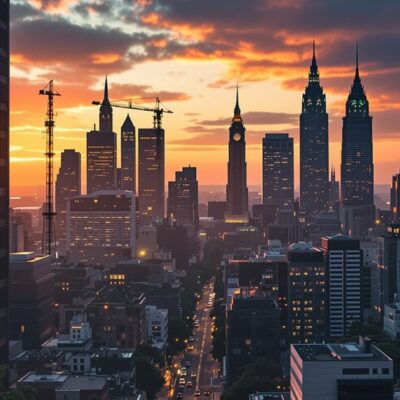


Maya’s first morning in Copenhagen began with bicycle bells. Not the cheerful kind from movies, but a sharp, efficient ringing that matched the steel-gray sky. She had cashed out her savings for this. A city had just landed in the top three of Mental Floss’s 2026 ranking of the best places in the world to call home. The apartment cost forty percent more than her place back in Ohio. The radiator hissed behind white walls that smelled like fresh paint. She sat on the edge of a narrow bed and realized she did not know a single person within four thousand miles.
She is not an outlier. A counterintuitive pattern has surfaced in migration data: sixty-two percent of people who move to cities ranked in the global top ten for quality of life report sharper, more persistent feelings of loneliness within their first eighteen months than they ever felt in the places they left behind. The parks are pristine. The air is clean. The loneliness is surgical.
We have been sold a strange lie. That if the Wi-Fi is fast enough, if the museums are free on Sundays, if the crime rate sits low on a spreadsheet, happiness will follow like a faithful dog. But a city is not a product. It is a relationship. And like any relationship, the best ones cannot be ranked by a committee.
These lists—carefully compiled, mathematically rigorous—measure what can be counted. Green space per capita. Average salary. Number of concert halls. Hours of sunlight. They cannot measure whether the person in the apartment next door would notice if you didn’t come home. They cannot measure the texture of a Tuesday evening when you are sick and someone brings soup without being asked. They cannot measure the way a street smells like your grandmother’s kitchen, or the way a particular patch of sidewalk holds the ghost of your first kiss.
Maya discovered this the hard way. She joined a language cafe where expats gathered to practice Danish over subsidized coffee. Everyone was friendly. Everyone was transient. Everyone was performing the life of someone who belonged in a best city. Conversations stayed surface-level because no one planned to stay. They were all waiting for the ranked life to kick in, for the infrastructure to magically produce the belonging they craved.
The cities that win awards are often designed for efficiency, not attachment. You can have flawless public transit and still ride it every day feeling like a ghost. You can live in a metropolis with more Michelin stars than your home state has traffic lights and still eat dinner alone, night after night, staring at a wall where no photograph hangs because you haven’t stayed long enough to accumulate memories.
A city becomes ‘best’ on paper when it optimizes the externals. But the human heart does not run on infrastructure. It runs on recognition. When researchers studied why certain urban residents reported sky-high wellbeing despite modest incomes and aging apartments, they found one constant: the residents felt seen. Not in a grand, spotlight way. In a microscopic way. The baker who slips an extra pastry into your bag because you look tired. The elderly woman in the park who comments on the weather, creating a tiny bridge between two strangers. These moments are not accidental. They are cultivated by cities that leave room for mess, for slowness, for the inefficient magic of human friction.
The cruelty is that the cities topping the 2026 charts are often too polished, too expensive, too curated to allow for this friction. When rents climb high enough, everyone works sixty hours to stay afloat. When a neighborhood becomes ‘best,’ it fills with people chasing an idea rather than building a life. The transplants arrive with vision boards and carefully calculated career arcs. They stay for two years, then leave for the next ranked city, carrying their loneliness with them like matched luggage.
Maya hit her wall on a Tuesday in February. Darkness fell at four in the afternoon. She had spoken aloud only twice that day: once to order a coffee, once to thank a delivery driver. She opened the ranked city’s official website and stared at the photographs of smiling families on bicycles. She felt a strange anger. The city had not lied to her. It had simply never promised what she actually needed. No tram line, however punctual, can replace the sound of someone calling your name across a room.
She began to look for one soft moment a day. The Pakistani taxi driver who recommended a restaurant that was not on any blog. The librarian who smiled when Maya returned a book late, and said, ‘Happens to everyone.’ These were not the grand amenities that had lured her across an ocean. They were small, fragile proofs that she existed in the eyes of other people. She started to understand that the best cities in the world are not destinations. They are decisions. The decision to let a place know you, and the braver decision to let yourself be known.
This is the shift that no ranking captures. The move from consuming a city to participating in one. From photographing your brunch to burning a dish at a potluck and having friends laugh about it for years. The world’s best cities are not those with the cleanest streets. They are the ones where you can be a disaster and still have a seat at the table.
The revelation does not arrive with fireworks. It arrives when you realize that the paradise at the top of this year’s list is just stone and steel without your participation. A city becomes home only when you have embarrassed yourself in its grocery stores, when you have learned which shop owner will let you pay tomorrow, when you have a bench in the park that is unofficially yours because you have cried on it and celebrated on it and eaten sandwiches on it in equal measure. This takes time. Rankings never account for time. They are snapshots. Home is a long exposure.
Maya eventually left. Not for another ranked city. She moved to a smaller place where the apartment had water stains and the tram broke down on humid afternoons. But the fruit vendor on the corner called her ‘linda’ when she bought oranges, and after three weeks, he started setting aside the best ones. That was the moment she understood. The best city in the world is not the one with the highest score. It is the one where you stop being a consumer of experiences and start being a neighbor. It is the place that learns you, slowly, the way a song learns your voice when you sing it often enough.
Last Thursday, Maya locked herself out of her apartment. She knocked on Mrs. Gable’s door two floors down. Mrs. Gable is eighty-four, watches television too loud, and smells like lavender and stale cigarettes. She keeps a spare key now. They had tea in a living room cluttered with porcelain cats. The television droned. Neither of them said anything remarkable. But Maya sat in that chaos and felt something she had not felt in the top-ranked city: she felt impossible to replace. The city did not know her name. Mrs. Gable did.
So when you read the new lists for 2026, remember what they cannot tell you. A city is not a trophy to win. It is a conversation to have, slowly, over years, until the sound of your footsteps on its sidewalks becomes part of its music. You do not find the best city in the world. You build it. One borrowed key. One extra pastry. One ‘the usual?’ at a time. The rankings will change next year. The lists will reshuffle. But the feeling of a hand on your shoulder when you are crying in a language you barely speak? That is the only metric that has ever mattered.